






What's Happening?
Trout, a non-native species, was introduced to Kashmir in 1900 from Scotland, following a failed attempt in 1899. The first trout hatchery was established in Harwan in 1901 by Frank J. Mitchell, with the support of Maharaja Pratap Singh. This initiative
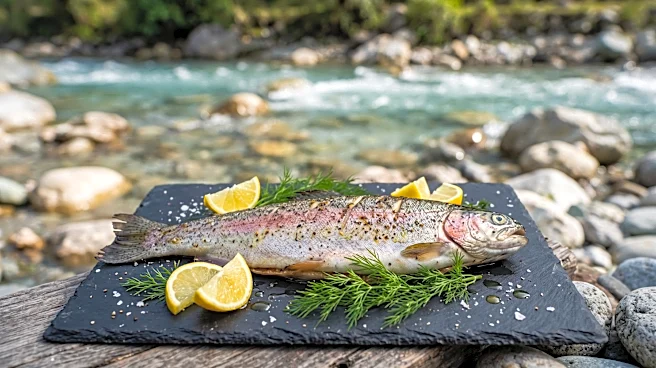
led to the creation of the Department of Fisheries in 1903. Today, Kashmir has a thriving trout industry, with 583 private and state-assisted trout units producing approximately 500 tonnes of trout in 2020, according to a 2021 Mongabay India report. Kokernag, in Anantnag district, hosts what is described as Asia's largest trout farm, established in 1995 with European support. This farm supplies eggs and young fish to other farms across the valley and to other Himalayan states. Anantnag was declared the trout district of India in June 2018. Both brown and rainbow trout are present, with rainbow trout primarily farmed and brown trout found wild in rivers like the Lidder and Brengi.
Why It's Important?
The development of trout farming in Kashmir represents a significant economic and agricultural diversification for the region. What began as an introduction of a non-native species has evolved into a substantial industry, providing livelihoods and contributing to the local economy. The production of 500 tonnes of trout annually indicates a robust agricultural sector that leverages Kashmir's natural cold-water resources, which are ideal for trout. The Kokernag farm's role as a major supplier of eggs and young fish underscores its importance as a regional hub for aquaculture, supporting smaller farms and potentially influencing fish farming practices in neighboring areas. This industry also offers tourism potential, with opportunities for trout fishing and culinary experiences, attracting visitors and further boosting local businesses. The success of trout farming demonstrates how strategic agricultural initiatives can create sustainable economic opportunities and enhance regional identity, as seen with Anantnag being declared the 'trout district.'
What's Next?
The trout industry in Kashmir is expected to continue its growth, with ongoing efforts to supply eggs and young fish from facilities like the Kokernag farm to private farmers. The focus on both farmed rainbow trout and wild brown trout suggests a dual approach to commercial production and ecological management, including restocking rivers. Tourists can engage in trout fishing with permits from the Department of Fisheries, indicating a potential for further development of angling tourism. The availability of farmed rainbow trout year-round ensures a consistent supply for local consumption and markets, even during the breeding season from November to February. Future developments may include further expansion of farming units, advancements in aquaculture technology, and increased promotion of trout as a regional culinary specialty, potentially leading to greater economic benefits and job creation within the region.
Beyond the Headlines
The story of trout in Kashmir extends beyond its economic impact, touching upon ecological adaptation and cultural integration. The successful introduction and proliferation of a non-native species highlight the adaptability of certain ecosystems and the potential for human intervention to reshape local biodiversity. While economically beneficial, the presence of non-native species can also raise ecological questions regarding their impact on indigenous aquatic life and ecosystem balance, though the source does not detail such concerns. Culturally, trout has become an 'ordinary Sunday food' for locals and a culinary highlight for tourists, demonstrating how an introduced element can become deeply embedded in local traditions and cuisine. This integration reflects a broader theme of how global exchanges, even those initiated over a century ago, can profoundly influence regional identity and daily life, transforming both the natural landscape and human practices within a specific geographic area.