



What's Happening?
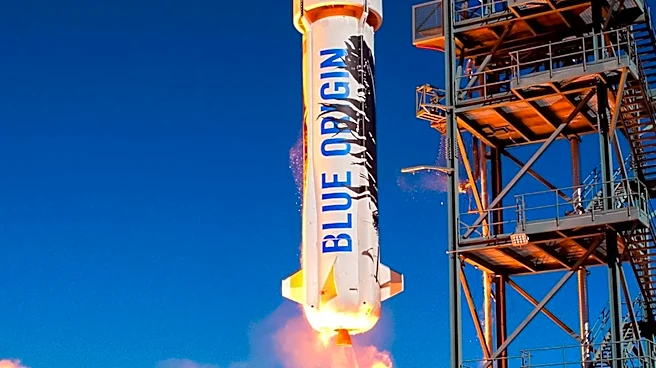
Blue Origin, led by CEO Dave Limp, is aiming for a return to flight in January for its New Glenn rocket. This follows an explosion during a ground test in May, which was attributed to a faulty oxygen valve on one of its BE-4 engines. The New Glenn rocket has
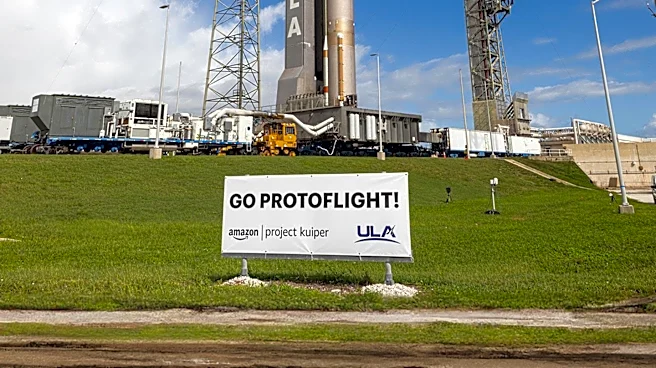
been grounded since the incident. This development comes as Amazon faces significant challenges in deploying its Project Kuiper satellite constellation, with two American rockets, including New Glenn and United Launch Alliance's (ULA) Vulcan Centaur, currently out of commission. The Vulcan Centaur recently failed to place 40 Amazon satellites into orbit due to an issue with fuel delivery to its BE-4 engines, though the engines themselves are not believed to be at fault. Amazon has 24 reserved launches with New Glenn and 38 with Vulcan, making the return of these rockets crucial for its satellite deployment schedule.
Why It's Important?
The grounding of both Blue Origin's New Glenn and ULA's Vulcan Centaur significantly impacts Amazon's ambitious Project Kuiper, a satellite constellation designed to provide broadband internet. Amazon has a regulatory deadline from the FCC to deploy half of its 3,232 satellites by July 30, 2026. With only 396 satellites launched before the Vulcan failure, Amazon is far behind schedule, having deployed only about a quarter of its initial target and 12% of the full constellation. The reliance on European rockets like Ariane 6 for near-term launches highlights a critical vulnerability in the U.S. commercial space launch sector. This situation could delay Amazon's entry into the satellite internet market, potentially giving competitors like SpaceX's Starlink a further advantage and impacting the availability of broadband services in underserved areas.
What's Next?
Blue Origin is targeting a January return to flight for New Glenn, which would alleviate some of the pressure on Amazon's launch schedule. Meanwhile, ULA is conducting an investigation into the Vulcan Centaur failure, with the Federal Aviation Administration (FAA) overseeing the process. The next scheduled launch for Amazon Leo satellites is on November 23, 2026, using a European Ariane 6 rocket. While Ariane 6 can help with some deployments, the long-term success of Project Kuiper hinges on the timely return of New Glenn and Vulcan Centaur to service. Amazon has also reserved additional flights with Ariane 6 starting in 2029, indicating a diversified approach to launch providers, but immediate capacity remains a concern.
Beyond the Headlines
The current challenges faced by Blue Origin and ULA underscore the complexities and inherent risks in developing and operating advanced rocket technology. The incidents highlight the critical importance of robust testing and stringent quality control in the aerospace industry. While the immediate focus is on Amazon's satellite deployment, the broader implication is a potential shift in the competitive landscape of the commercial space sector. A prolonged grounding of U.S. launch vehicles could lead to increased reliance on international partners, affecting national strategic interests in space and potentially influencing future investment and policy decisions regarding domestic launch capabilities. The incidents also raise questions about the resilience of supply chains for critical components like rocket engines.