





What's Happening?
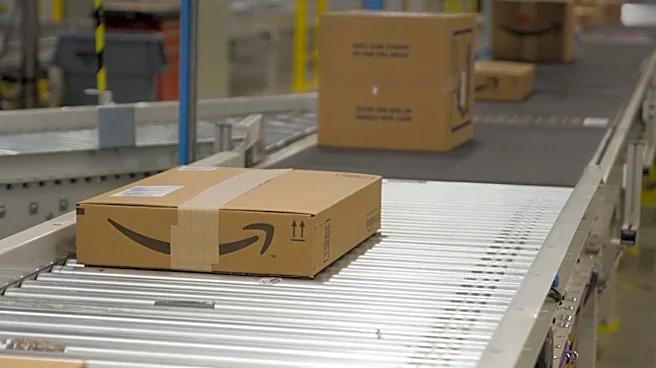
San Diego Councilmember Sean Elo-Rivera and local labor union leaders are publicly criticizing Amazon for allegedly using public parks, specifically Crown Point Park, as unauthorized distribution centers. Elo-Rivera asserts that Amazon conducted these
operations without obtaining necessary permits or compensating the city, deeming the practice unacceptable. He emphasized that public parks are intended for community use, such as family activities, yoga, and youth sports, and not for corporate profit. Amazon, through spokesperson Austin Stowe, acknowledged the use of Crown Point Shores as a package transfer site, attributing it to a 'miscommunication' and stating that safeguards have been implemented to prevent recurrence. However, Elo-Rivera expressed skepticism, suggesting Amazon intentionally used public land to reduce costs. The city attorney, Heather Ferbert, is reportedly exploring potential fines and measures to prevent future unauthorized use of parks.
Why It's Important?
This situation highlights a significant conflict between corporate operational strategies and public resource management in U.S. cities. Amazon's alleged use of public parks for distribution raises concerns about fair competition, as it potentially allows the company to bypass costs that other businesses, particularly small local ones, incur for private distribution spaces. This practice could be seen as a public subsidy for a large corporation, creating an uneven playing field. Furthermore, it underscores the challenges cities face in regulating the activities of large e-commerce companies and protecting public spaces for their intended community purposes. The incident also brings to light broader issues of corporate accountability and the impact of rapid e-commerce expansion on urban infrastructure and public amenities.
What's Next?
The San Diego City Attorney's office will likely continue its investigation into whether Amazon can be fined for the unauthorized use of public parks and what legal steps can be taken to prevent future occurrences. Councilmember Elo-Rivera has urged residents to report any instances of Amazon using city land for distribution to his office, indicating a proactive stance against such practices. This could lead to increased scrutiny of Amazon's logistics operations within San Diego and potentially other U.S. cities. The incident may also prompt other municipalities to review their regulations regarding commercial use of public spaces and to implement stricter enforcement mechanisms to protect community resources from unauthorized corporate exploitation. Amazon, in turn, will likely face pressure to demonstrate its commitment to corporate responsibility and to ensure its operational practices align with local regulations.
Beyond the Headlines
This incident touches upon the evolving relationship between large corporations and urban environments, particularly as e-commerce continues to reshape logistics and delivery models. The debate over Amazon's use of public parks extends beyond mere permit violations; it delves into questions of corporate citizenship, the equitable use of public resources, and the social contract between businesses and the communities they operate in. It also highlights the tension between efficiency-driven business models and the preservation of public goods. The outcome in San Diego could set a precedent for how U.S. cities address similar issues, potentially influencing urban planning, commercial zoning, and the regulation of last-mile delivery services across the country. The ethical implications of a multi-billion dollar corporation utilizing public land without compensation for private gain are likely to resonate in broader discussions about corporate responsibility and urban equity.