









What's Happening?
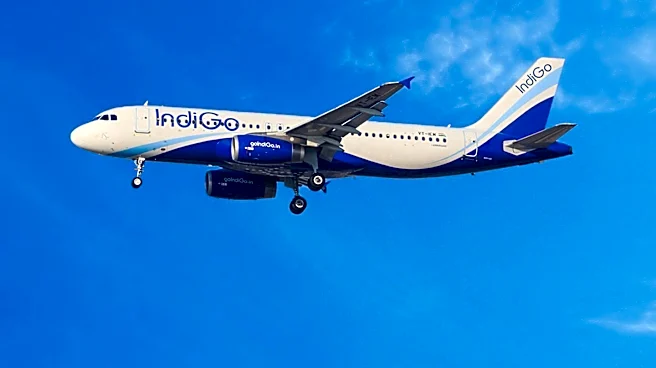
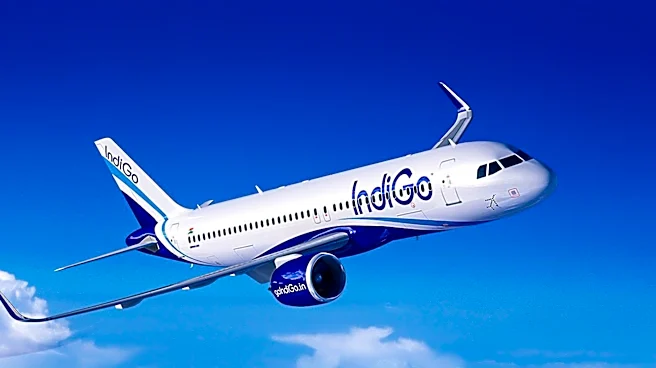
IndiGo, legally known as InterGlobe Aviation Limited, is an airline headquartered in Gurgaon, India, that provides both domestic and international flight services. The airline is recognized for its low fares, extensive network, and consistent punctuality,
making it a popular choice for travelers. IndiGo operates a large fleet of Airbus A320s, A321neos, and ATR 72-600s, ensuring high frequency and reliability across its routes. The airline emphasizes on-time performance, clean cabins, and courteous crew. Travelers can book flights through various platforms, including SkyFlicker, which offers tools for finding the lowest fares, managing bookings, and accessing discounts. IndiGo has expanded its international presence, serving destinations across the Middle East, Southeast Asia, and Central Asia, while also playing a significant role in India's domestic UDAN scheme to connect underserved airports.
Why It's Important?
IndiGo's operational model, centered on affordability and efficiency, significantly impacts the travel industry by making air travel more accessible to a broader demographic. Its extensive network, both domestically and internationally, facilitates business, educational, and leisure travel, contributing to economic activity and connectivity. The airline's focus on punctuality and customer service sets a benchmark in the aviation sector, influencing passenger expectations and competitive standards. For consumers, IndiGo's offerings, including various fare buckets (Saver, Flexi, Super 6E) and discounts like student fares and promotional coupons, provide flexibility and cost-saving opportunities. The airline's participation in government initiatives like the UDAN scheme also helps in regional development by improving connectivity to smaller cities and towns, fostering economic growth in those areas.
What's Next?
IndiGo is expected to continue its expansion, particularly in international markets, as it seeks to broaden its global footprint. The airline will likely maintain its strategy of offering competitive fares and enhancing operational efficiency to attract more passengers. Further integration of technology for booking and managing flights, such as through platforms like SkyFlicker, will likely be a focus to improve customer experience. The airline may also introduce more tailored services and fare options to cater to diverse traveler needs, including business travelers, students, and families. As the aviation industry evolves, IndiGo will likely adapt to changing market demands, fuel prices, and regulatory environments, potentially exploring new routes and fleet enhancements to sustain its growth and market position.
Beyond the Headlines
The success of airlines like IndiGo highlights a broader trend in the global aviation industry towards low-cost carriers dominating market share, driven by consumer demand for affordable travel. This shift has implications for traditional full-service airlines, pushing them to innovate and adapt their service models. IndiGo's emphasis on operational efficiency and cost control reflects a strategic response to a highly competitive market, where even small improvements in turnaround times or fuel efficiency can yield significant advantages. The airline's growth also underscores the increasing importance of air travel as a primary mode of transportation, contributing to globalization and cultural exchange. However, the rapid expansion of air travel also raises environmental concerns, prompting discussions around sustainable aviation practices and the industry's long-term impact on climate change.