

What's Happening?
The Oklahoma City Thunder, a team that has rapidly ascended in the NBA, is confronting significant challenges related to the league's second tax apron. Despite successfully avoiding an exorbitant luxury tax bill this summer through a series of cap-clearing
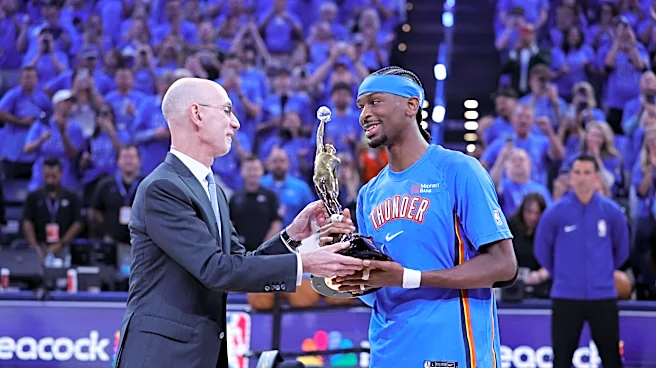
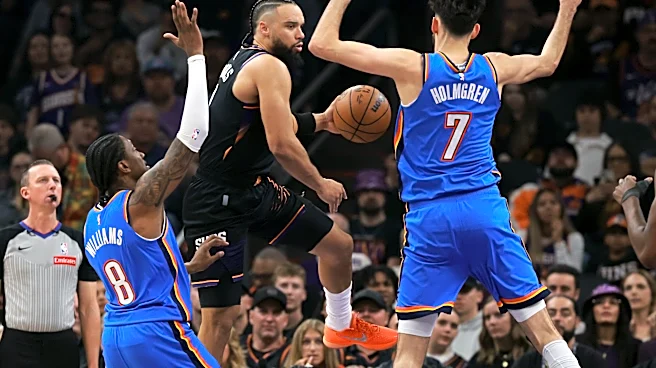
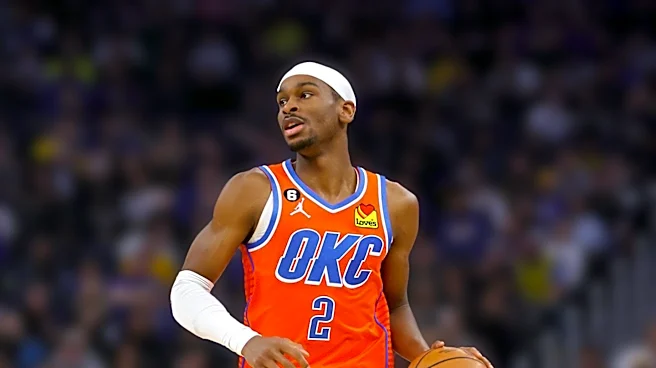
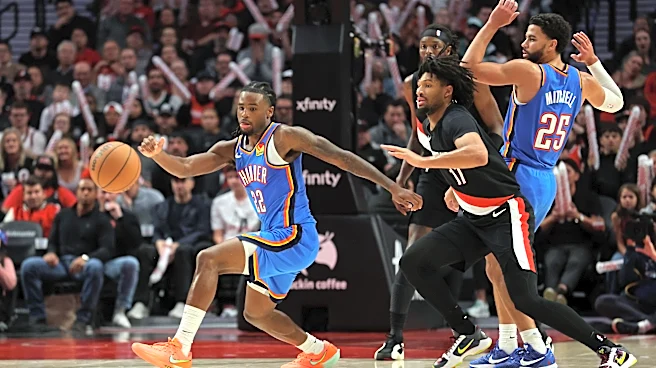
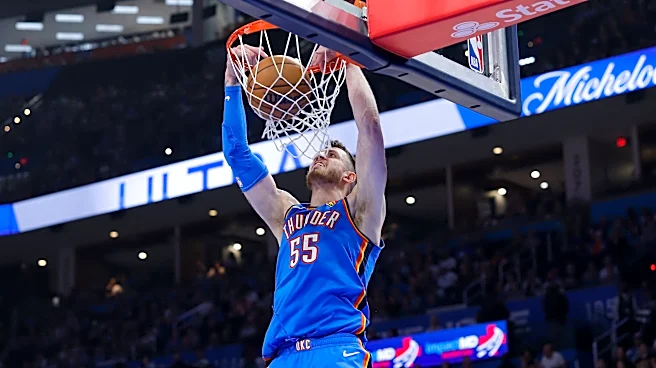
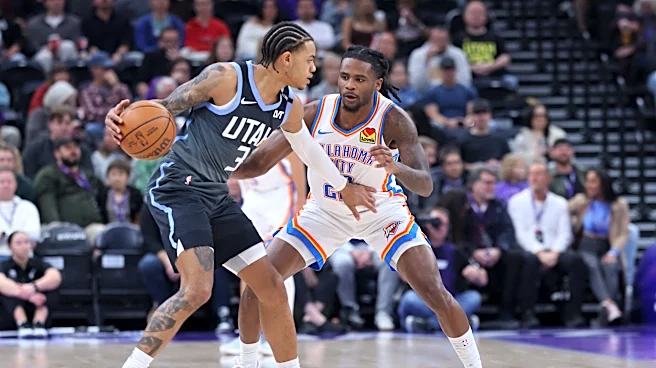
trades, the team's financial situation is projected to become more difficult in upcoming seasons. The Thunder's core trio, consisting of Shai Gilgeous-Alexander, Chet Holmgren, and Jalen Williams, currently accounts for nearly 75% of the team's active cap of $214.2 million. With Gilgeous-Alexander's salary set to increase significantly in the 2027-28 season, and both Holmgren and Williams having substantial contracts extending for four more years, the team's total payroll is projected to exceed the salary cap by over $63.7 million next year. This financial strain, as noted by ESPN's Ben Golliver, suggests that the Thunder may be forced to consider trading either Williams or Holmgren to maintain financial flexibility and depth, potentially shifting from a 'big three' to a 'big two'.
Why It's Important?
This situation highlights the increasing impact of the NBA's collective bargaining agreement (CBA) and its second tax apron on team roster construction and long-term sustainability. For the Thunder, a team built on young, high-potential talent, the necessity of potentially trading a key player like Chet Holmgren or Jalen Williams could significantly alter their championship aspirations and competitive window. It underscores a broader league trend where even successful, well-managed teams must make difficult personnel decisions to navigate financial regulations. The potential trade of a rising star like Holmgren or Williams would not only affect the Thunder's on-court performance but also send ripples through the league's player market, influencing trade values and team strategies. This scenario demonstrates how financial constraints can override athletic potential, forcing teams to prioritize fiscal health over retaining a highly talented core.
What's Next?
The Oklahoma City Thunder's front office will need to strategically address their looming salary cap issues in the coming offseasons. With Gilgeous-Alexander's salary set to spike and the substantial contracts of Holmgren and Williams, the team faces an inevitable decision regarding its roster composition. While the Thunder have a strong track record of scouting and developing young talent, they may need to explore trade options for either Williams or Holmgren to create financial breathing room and maintain roster depth. The team's ability to identify and develop a 'star-caliber role player who consistently outplays his contract,' similar to a new-and-improved version of James Harden, will be crucial. The situation suggests that the Thunder may already be preparing for such contingencies, with Ajay Mitchell being groomed as a potential replacement for Jalen Williams. The coming seasons will reveal how the Thunder navigate these financial pressures while attempting to remain a title contender.
Beyond the Headlines
The Thunder's predicament reflects a growing tension between the desire to build and retain a superstar-laden team and the financial realities imposed by the NBA's collective bargaining agreement. This situation could set a precedent for other teams with multiple young, highly paid stars, forcing them to make similar difficult choices. It also raises questions about the long-term viability of 'super teams' under the current CBA structure, particularly for smaller market teams that may have fewer revenue streams to offset luxury tax penalties. The ethical implications of trading a player who has contributed significantly to a team's success due to financial rather than performance reasons could also become a point of discussion. Ultimately, this scenario underscores the complex interplay between sports economics, player development, and team loyalty in professional basketball.