


What's Happening?
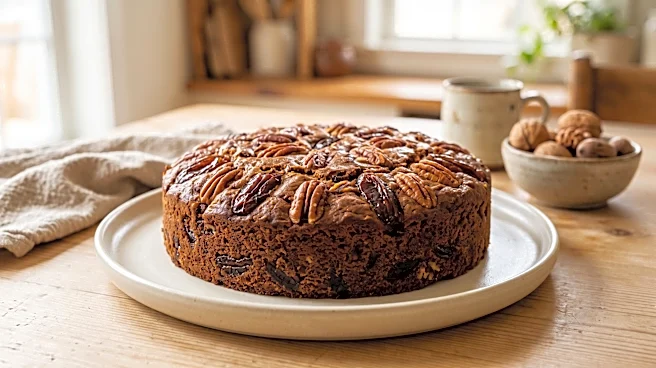
In the early 1960s, Duncan Hines introduced a line of 'Early American' cake mixes featuring flavors like Date Nut, Butter Pecan, Fudge Nut, Cherry Almond, Applesauce Raisin, and Orange. These mixes were designed to evoke a sense of nostalgia for simpler,
pioneering times, contrasting with the trend of ornately frosted, multi-tiered cakes popular at the time. The company's advertisements described these cakes as 'Cake rediscovered!' and emphasized their rich, moist, and deep-flavored qualities, often studded with fruits and nuts, suggesting they were so flavorful they didn't require icing. For instance, the Orange flavor contained real bits of candied zest, Cherry Almond had chopped maraschino cherries and slivered almonds, and Date Nut featured real chunks of sliced dates. This series aimed to offer a textural delight reminiscent of 'America's early days, when the rich earth yielded bountiful harvests.'
Why It's Important?
The re-examination of Duncan Hines' Early American cake mixes offers insight into the evolving American consumer palate and marketing strategies in the mid-20th century. It demonstrates how food companies leveraged nostalgia to differentiate products, even as the broader market moved towards more elaborate culinary trends. This historical perspective highlights the cyclical nature of food preferences, where simplicity and 'old-timey' flavors can become a selling point amidst increasing complexity. For the food industry, it underscores the enduring power of emotional connections to food, showing how brands can tap into cultural memory to create perceived value. The success of such campaigns can influence product development and advertising, as companies seek to understand what resonates with consumers beyond just taste, including cultural and historical associations.
Beyond the Headlines
The marketing of Duncan Hines' Early American cake mixes reflects a broader cultural phenomenon in the U.S. where idealized versions of the past are often invoked to sell products. This 'nostalgia marketing' taps into a collective longing for perceived simpler times, often associated with traditional values and a sense of authenticity. It suggests that consumer choices are not solely driven by product utility or taste, but also by the stories and emotions attached to them. This approach can be particularly effective during periods of rapid social or technological change, offering a comforting link to a familiar past. The discontinuation of these specific flavors also illustrates the dynamic nature of consumer demand and the constant need for brands to innovate or adapt, even when appealing to timeless sentiments.