
What's Happening?
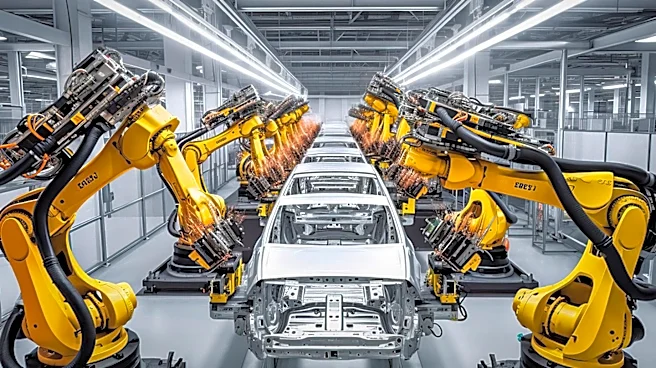
Amazon Web Services (AWS) has significantly expanded its artificial intelligence (AI) offerings, introducing a new open-source Physical AI Toolchain. This toolchain integrates AWS infrastructure with NVIDIA
robotics technologies, aiming to provide developers with advanced resources. Concurrently, AWS released an extensive 80-page guide detailing the construction of AI agents within cloud-native systems, covering frameworks such as Strands, LangGraph, CrewAI, Bedrock Agents, and AutoGen. In a move to bolster AI talent, AWS launched two new AI certifications—one entry-level and one intermediate—and initiated a two-year AI training program called 'AI Ready.' Furthermore, the company committed $230 million to an AI fund designed to support promising AI startups. Developers can also now access Bedrock Studio in preview, facilitating the creation of generative AI applications. These initiatives collectively aim to democratize AI development and foster innovation across various sectors.
Why It's Important?
These developments from AWS are crucial for the U.S. technology sector and broader economy. The open-source Physical AI Toolchain, by combining AWS and NVIDIA technologies, could accelerate the development of robotics and automation, impacting manufacturing, logistics, and other industries by making advanced AI more accessible. The comprehensive guide for building AI agents and the new AI certifications are vital for workforce development, addressing the growing demand for skilled AI professionals in the U.S. The 'AI Ready' training initiative will help bridge the skills gap, ensuring a steady supply of talent capable of driving AI innovation. The $230 million AI fund is a significant investment in the startup ecosystem, potentially fostering the next generation of AI companies and solutions, which could lead to job creation and economic growth. The availability of Bedrock Studio in preview empowers developers to build generative AI applications more easily, potentially leading to new products and services across various industries, from content creation to customer service. These efforts position AWS as a key player in shaping the future of AI development and adoption in the U.S.
What's Next?
The immediate next steps will likely involve the widespread adoption and utilization of the new Physical AI Toolchain by developers, leading to an increase in innovative robotics and AI applications. The new AI certifications and the 'AI Ready' training program are expected to attract a large number of participants, contributing to a more skilled AI workforce in the U.S. The $230 million AI fund will begin allocating resources to selected startups, which could lead to the emergence of groundbreaking AI technologies and companies. As Bedrock Studio becomes more widely available, developers will likely leverage it to create a diverse range of generative AI applications, potentially transforming various digital services and products. AWS will likely continue to iterate on these offerings, incorporating user feedback and expanding their capabilities to maintain its competitive edge in the rapidly evolving AI landscape. The success of these initiatives will be measured by the number of developers engaged, the quality of AI solutions produced, and the growth of the AI startup ecosystem.
Beyond the Headlines
Beyond the immediate technical and economic impacts, AWS's expanded AI initiatives carry deeper implications for the ethical and societal dimensions of artificial intelligence. The emphasis on open-source tools and comprehensive guides suggests a move towards democratizing AI development, which could lead to a more diverse range of voices and perspectives shaping AI's future. However, this also raises questions about responsible AI development and deployment, particularly concerning bias, fairness, and accountability in AI systems. The significant investment in AI startups, while fostering innovation, also highlights the increasing concentration of power within major tech companies in guiding AI's trajectory. The focus on training and certification underscores the critical need for a skilled workforce, but also points to the potential for job displacement in sectors where AI and robotics become prevalent. These developments will necessitate ongoing discussions and policy-making around AI governance, data privacy, and the future of work to ensure that AI advancements benefit society broadly and equitably.