




What's Happening?
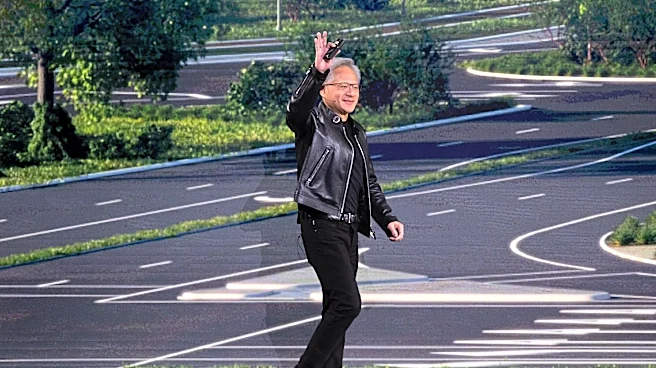
American investor Sarah Guo has publicly supported Jensen Huang's return to Nvidia, arguing that this move is crucial for democratizing frontier intelligence. Guo believes that Huang's leadership will prevent artificial intelligence from becoming an exclusive
domain controlled by a select few entities. Her stance, articulated in a guest essay, highlights the potential for broader access and development in the AI sector under Huang's guidance. This perspective comes amidst ongoing discussions about the future direction and accessibility of advanced AI technologies, with many stakeholders concerned about concentration of power and resources within the industry. Guo's endorsement underscores a significant viewpoint within the investment and technology communities regarding the strategic importance of leadership in shaping the AI landscape.
Why It's Important?
Sarah Guo's argument for Jensen Huang's return to Nvidia carries significant weight for the U.S. technology and business sectors. Nvidia, a leading chip manufacturer, plays a pivotal role in the advancement of AI, and its leadership decisions can profoundly impact the entire industry. If Huang's return indeed leads to a more democratized AI landscape, it could foster increased innovation, competition, and accessibility to AI tools and platforms across various U.S. industries. This would benefit smaller startups and research institutions by lowering barriers to entry and potentially preventing a monopolistic control over critical AI infrastructure. Conversely, if AI development becomes concentrated among a few powerful entities, it could stifle innovation, limit economic opportunities for new players, and raise concerns about ethical implications and control over advanced technologies. Guo's advocacy suggests a strategic vision for AI development that prioritizes widespread benefit over exclusive control, which could influence investment trends and policy discussions.
What's Next?
The implications of Jensen Huang's leadership at Nvidia, as championed by Sarah Guo, will likely be observed in Nvidia's future strategic decisions and product development. If the company aligns with the vision of democratizing AI, it could lead to more accessible AI development tools, open-source initiatives, or partnerships aimed at broadening AI adoption. This could also influence how other major tech companies approach AI development, potentially encouraging a more collaborative and open ecosystem. Stakeholders, including investors, startups, and government bodies, will be closely watching Nvidia's moves to see if Guo's prediction of preventing AI from becoming an exclusive preserve materializes. The broader discussion around AI accessibility and ethical development is expected to continue, with industry leaders and policymakers potentially exploring regulations or incentives to ensure equitable access to advanced AI technologies.
Beyond the Headlines
Sarah Guo's commentary touches upon a fundamental ethical and economic debate within the rapidly evolving field of artificial intelligence: the balance between innovation and accessibility. The concern that AI could become the 'preserve of a few' highlights anxieties about technological elitism and its potential to exacerbate existing societal inequalities. If advanced AI capabilities are concentrated in the hands of a limited number of corporations or nations, it could lead to significant power imbalances, affecting everything from economic competitiveness to national security. Guo's support for Huang's return, framed as a move towards democratization, suggests a proactive effort to mitigate these risks. This perspective underscores the growing recognition that the development and deployment of AI are not merely technical challenges but also profound societal and governance issues that require careful consideration to ensure broad-based benefits and prevent unintended consequences.