





What's Happening?
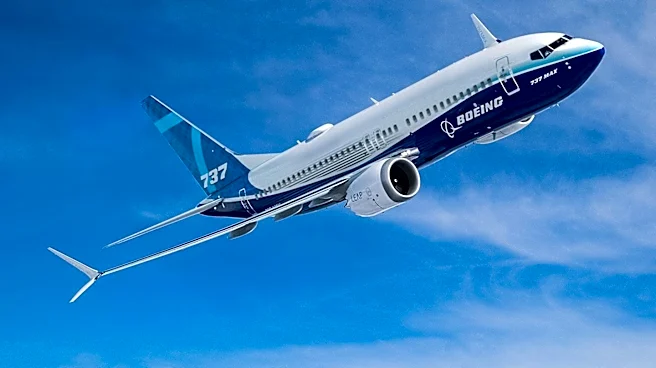
At a recent CTO forum during the Farnborough Airshow, aviation industry leaders discussed the transformative potential of artificial intelligence (AI) in aerospace engineering and manufacturing. Boeing's CTO, Lane Ballard, described AI as a 'force multiplier'
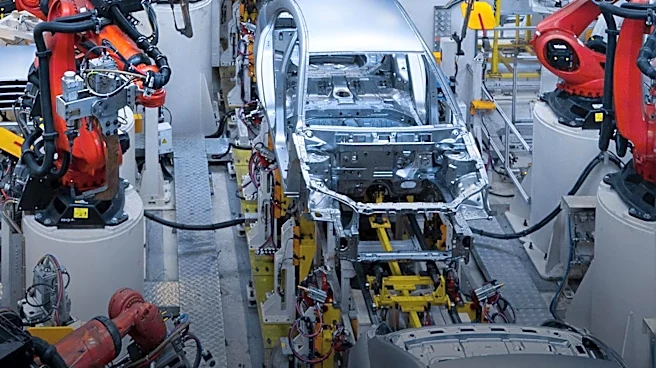
that accelerates data analysis, allowing engineers to focus on problem-solving. Simon Burr from Rolls-Royce echoed these sentiments, emphasizing AI's ability to handle vast amounts of data. The forum highlighted AI's role in scaling up manufacturing processes, potentially leading to faster production of next-generation engines and components.
Why It's Important?
The integration of AI into the aviation industry represents a significant shift towards more efficient and innovative manufacturing processes. By reducing the time required for data analysis, AI enables engineers to focus on creative and complex problem-solving, potentially leading to advancements in aircraft design and performance. This technological evolution could enhance the competitiveness of U.S. aerospace companies on a global scale, driving economic growth and innovation. Additionally, the increased efficiency in manufacturing could lead to cost reductions and faster delivery times for new aircraft models.
What's Next?
As AI continues to be integrated into aerospace engineering, companies will likely invest in developing AI-driven tools and systems to further enhance productivity and innovation. The industry may see increased collaboration between technology firms and aerospace manufacturers to leverage AI capabilities. Regulatory bodies may also need to adapt to ensure that AI applications in aviation meet safety and ethical standards. The ongoing development of AI technologies will be closely watched by industry stakeholders, including investors, engineers, and policymakers.