







What's Happening?
Historically, the color purple has been consistently associated with royalty and power across various cultures, including ancient China, the Maya, and European monarchies like those of England and Rome. This association stems primarily from the extreme
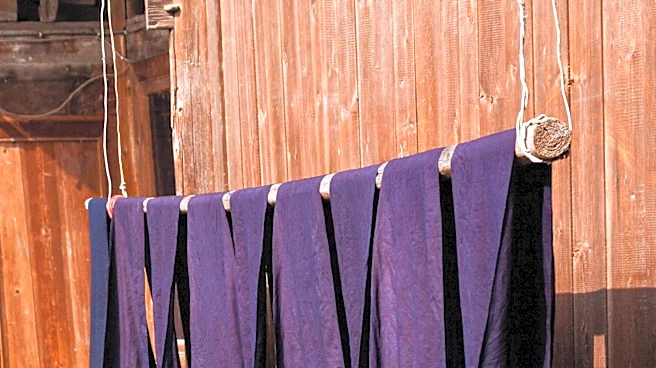
difficulty and cost involved in producing purple dye in the ancient world. The most prized purple, known as Tyrian purple, was derived from the mucus, entrails, or entire bodies of predatory murex sea snails, a process centered in the ancient city of Tyre, Phoenicia, approximately 3,500 years ago. The laborious and secretive method of extracting and processing this dye made purple fabrics incredibly expensive, accessible only to the wealthiest and most powerful individuals. Sumptuary laws in places like Rome even prohibited ordinary citizens from wearing purple, further solidifying its status as a royal color.
Why It's Important?
This historical context is important for understanding the cultural significance of color and its role in societal stratification. The enduring association of purple with royalty highlights how economic factors and resource scarcity can shape cultural symbols and power dynamics. It demonstrates that the value of certain goods, like purple dye, was not solely based on aesthetic appeal but on the labor and rarity involved in their production. This historical precedent influenced fashion, law, and social norms for centuries, dictating who could wear certain colors and thereby visually reinforcing social hierarchies. Even as less expensive methods for producing purple dyes emerged, the deeply ingrained cultural connection between purple and prestige persisted, showcasing the long-lasting impact of historical practices on collective consciousness.
What's Next?
While the direct impact on current events is limited, understanding the historical significance of purple continues to inform cultural interpretations of color in art, design, and symbolism. The narrative of Tyrian purple serves as a case study in economic history, illustrating how ancient trade routes, technological limitations, and social structures influenced the value and meaning of commodities. Future discussions in fashion history, anthropology, and art history will likely continue to reference this unique origin story when exploring the symbolism of color and its role in conveying status and power across different eras and societies. The story also provides a compelling example for educational contexts on the intersection of science, economics, and culture.
Beyond the Headlines
The story of Tyrian purple offers deeper insights into the nature of luxury and exclusivity. It reveals that true luxury, historically, was often defined by scarcity and the arduous processes required to obtain rare materials. This contrasts with modern luxury, which can sometimes be mass-produced or artificially inflated in value. The ancient world's purple dye exemplifies a form of 'natural monopoly' based on geographical resources and specialized knowledge, leading to a highly controlled and exclusive product. This historical example can prompt reflection on contemporary luxury markets, intellectual property, and the ethical implications of resource exploitation. It also underscores how human ingenuity, even in ancient times, was driven by both practical needs and the desire for symbolic representation of power and status.