


What's Happening?
A detailed guide explores the evolution and variety of watch dial materials, tracing their history from the earliest portable timepieces around 1510 to contemporary designs. Initially, brass dials with engraved Roman numerals mimicked clocks, evolving
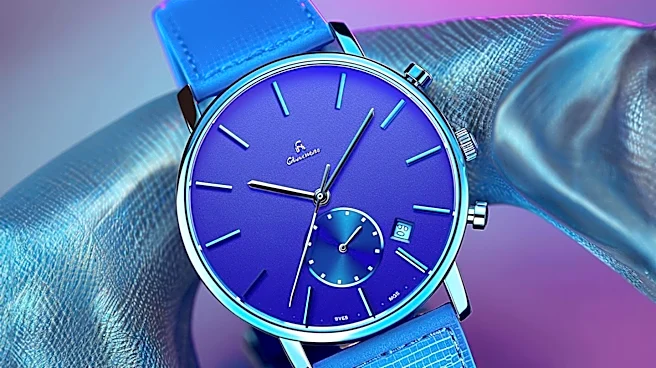
to include intricate patterns and Arabic numerals. Early watches lacked protective crystals, making them vulnerable to dust and water. The article highlights the development of vitreous enamel in France and Switzerland, particularly the 'Grand Feu' technique, which involves high-temperature firing for superior visual depth and durability. It also covers the emergence of lacquer as a more practical alternative in the 20th century, with Seiko notably using traditional Urushi lacquer. Porcelain dials, originating from China, are discussed, along with various metals like brass, gold, and even exotic materials such as meteorite. The guide also touches upon semi-precious stones like onyx and lapis lazuli, and artificial aventurine glass, which creates a starry night effect. Mother-of-pearl, a natural material from mollusc shells, is also featured, known for its iridescent quality. Unconventional materials like carbon fiber, sapphire crystals, and wood are also mentioned as modern innovations in watchmaking.
Why It's Important?
The comprehensive overview of watch dial materials is significant for both consumers and the watchmaking industry. For consumers, understanding the diverse range of materials, from traditional enamel to modern composites, provides valuable insight into the craftsmanship, durability, and aesthetic value of timepieces. This knowledge can inform purchasing decisions, helping individuals appreciate the intricate details and historical context behind their watches. For the industry, the continuous innovation in dial materials, such as the use of recycled plastics by brands like Oris and Maurice Lacroix, reflects a growing trend towards sustainability and novel design. The high failure rates associated with traditional techniques like Grand Feu enameling underscore the specialized skills and artistry required, contributing to the perceived luxury and cost of high-end watches. The shift from purely functional brass dials to ornate and exotic materials highlights the watch's evolution from a simple time-telling device to a piece of art and a status symbol, influencing market trends and consumer expectations.
What's Next?
The watchmaking industry is likely to continue exploring new and sustainable materials for watch dials, building on current trends that incorporate recycled plastics and other innovative composites. As consumer demand for unique and environmentally conscious products grows, brands may invest further in research and development to create dials that are both aesthetically pleasing and eco-friendly. The article notes that while traditional materials like enamel and lacquer still dominate, exotic options such as meteorite and natural stones are becoming more accessible, suggesting a potential increase in their adoption across various price points. Furthermore, advancements in manufacturing techniques could lead to more efficient production of complex dials, potentially reducing failure rates and making high-craftsmanship more attainable. The ongoing blend of traditional artistry with modern technology will shape the future of watch dial design, offering consumers an even broader array of choices that reflect both heritage and innovation.
Beyond the Headlines
The detailed exploration of watch dial materials reveals deeper cultural and historical narratives embedded within horology. The evolution from simple brass dials to intricate enamel and exotic stone faces mirrors broader societal shifts in aesthetics, technology, and luxury consumption. The 'Grand Feu' enameling technique, with its high failure rates and demanding process, symbolizes the enduring human pursuit of perfection and the value placed on artisanal skill in an increasingly mass-produced world. The use of materials like meteorite connects timepieces to cosmic origins, adding a philosophical dimension to their function. Moreover, the integration of recycled materials in modern watch dials reflects a growing global consciousness regarding environmental impact, transforming watches into statements of ethical consumerism. This blend of ancient craftsmanship, scientific innovation, and cultural significance elevates watch dials beyond mere components, making them miniature canvases that tell stories of human ingenuity, artistic expression, and evolving values.


