





What's Happening?
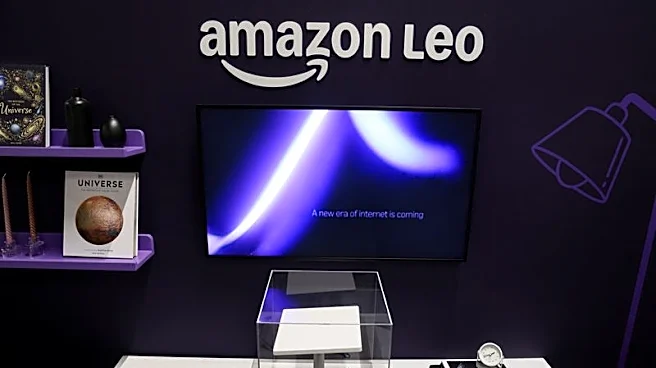
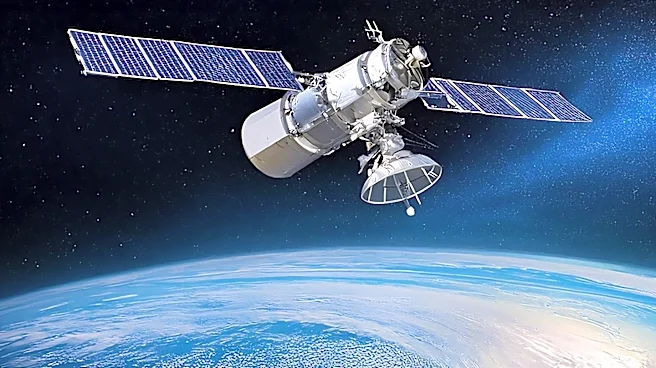
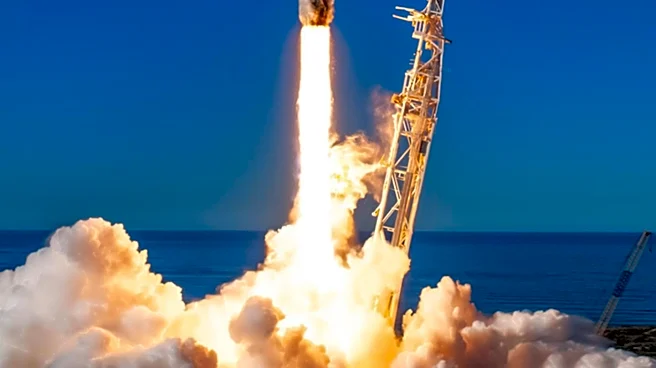
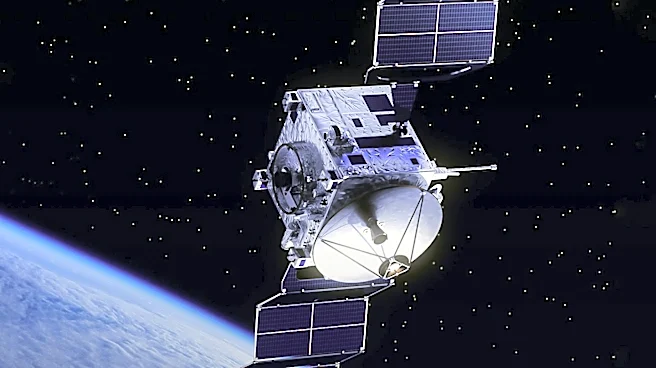
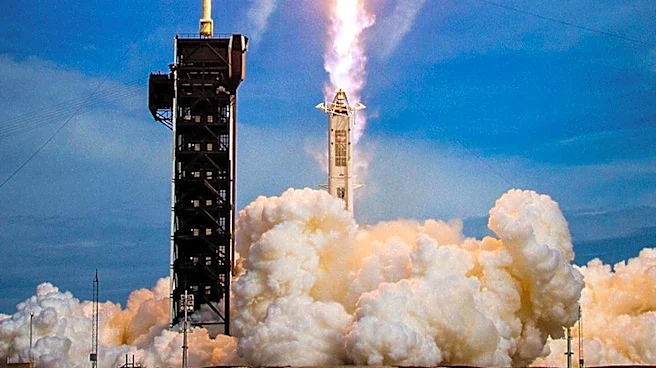
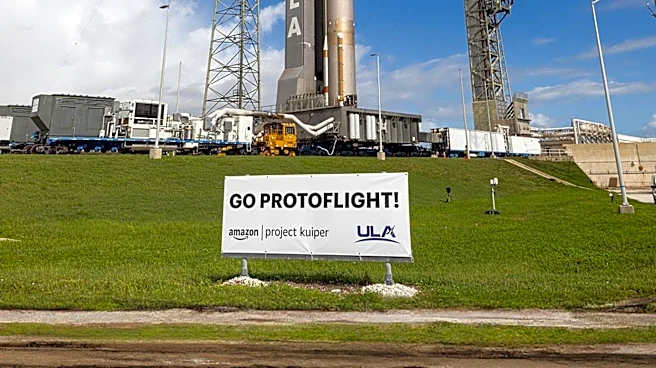
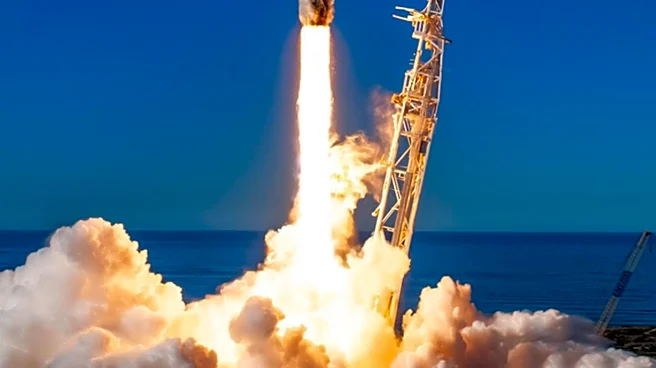
On July 2, 2026, an Atlas V rocket successfully launched 29 Amazon Leo satellites into orbit from Cape Canaveral. This marks the final use of the Atlas V for these satellites, as Amazon transitions to newer launch vehicles. The Amazon Leo satellites, part
of what was previously known as Project Kuiper, aim to provide global broadband internet access. The launch was the ninth of its kind, bringing the total number of Amazon Leo satellites in orbit to over 390. Future launches will utilize Vulcan Centaur rockets, European Ariane 6, and even Falcon 9 rockets from SpaceX, Amazon's main competitor.
Why It's Important?
The successful deployment of Amazon Leo satellites is a significant step in the competition to provide global internet access, directly challenging SpaceX's Starlink. This development highlights the growing role of private companies in space exploration and telecommunications. The transition to newer rockets like Vulcan Centaur reflects technological advancements and the phasing out of older models like the Atlas V, which has been a reliable workhorse since 2002. This shift could impact the aerospace industry, influencing future satellite deployment strategies and partnerships.
What's Next?
With the Atlas V's service life ending, attention turns to the Vulcan Centaur rockets, which have faced setbacks, including a recent accident. The aerospace industry will be watching closely to see how quickly these issues are resolved. Amazon's continued collaboration with various launch providers, including SpaceX, indicates a strategic approach to ensure the timely deployment of its satellite network. The success of these launches will be crucial for Amazon's ability to compete in the satellite internet market.