




What's Happening?
A recent survey of over 1,700 cord cutters indicates that YouTube TV is the leading live TV streaming service, with 31.6% of respondents subscribing to it. This figure significantly surpasses its competitors, establishing YouTube TV as the clear market
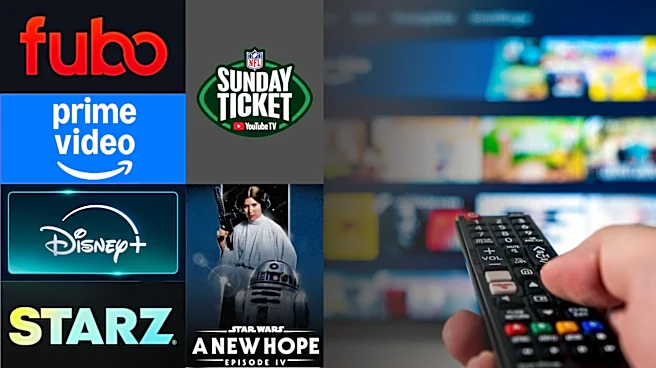
leader among individuals who have abandoned traditional cable or satellite television. Frndly TV and Sling TV each garnered 6.9% of responses, followed by DIRECTV with 5.9%, Philo with 5.4%, and Hulu with Live TV at 4.7%. Fubo ranked last among named services with 1.6%. Notably, 43.2% of respondents reported not subscribing to any live TV streaming service, suggesting a significant portion of cord cutters opt for on-demand platforms exclusively.
Why It's Important?
The survey results underscore YouTube TV's strong position in the competitive live TV streaming market and highlight the challenges faced by other providers. Its dominance suggests that factors like channel selection, cloud DVR capacity, and integration with the broader YouTube ecosystem are key drivers for subscriber preference among cord cutters. The high percentage of respondents without any live TV streaming subscription also indicates a growing segment of consumers who prioritize cost savings and on-demand content over live channels. This trend could force smaller services to further differentiate their offerings or target niche audiences to remain viable, while larger players like YouTube TV continue to consolidate their market share.
What's Next?
The live TV streaming market is expected to continue evolving, with providers facing rising programming costs and increased competition from free ad-supported and pure on-demand services. YouTube TV's sustained leadership may prompt competitors to re-evaluate their strategies, potentially leading to more aggressive pricing, enhanced features, or specialized content offerings. The significant portion of cord cutters opting out of live TV streaming altogether suggests that price sensitivity will remain a critical factor. Industry observers will closely watch how these dynamics influence subscriber growth, content acquisition, and the overall profitability of live TV streaming services in the coming years.
Beyond the Headlines
The survey's findings reveal a deeper shift in consumer behavior beyond simply 'cutting the cord.' Many households are not just replacing cable with a streaming equivalent but are fundamentally re-evaluating their need for live, linear television. This trend has profound implications for content creators, advertisers, and traditional broadcasters, as it signals a move towards more personalized, on-demand consumption. The success of YouTube TV, with its robust features and integration, suggests that convenience and comprehensive offerings are paramount for those who still desire live content. However, the large non-subscriber group indicates a growing segment that values flexibility and cost-effectiveness above all, potentially accelerating the decline of traditional linear viewing models.