







What's Happening?
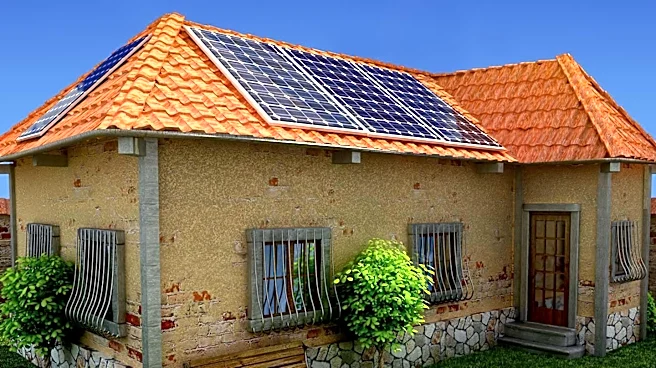
The global market for Building-Integrated Photovoltaics (BIPV) solar modules is entering a significant growth phase, driven by stricter building energy codes and mandates for net-zero construction across major economies. BIPV modules, which replace traditional
building materials in roofs, facades, and windows, are expected to grow at a compound annual growth rate of 12-18% from 2026 to 2035. This growth is supported by declining costs, increased architectural demand for customized modules, and regulatory pushes from entities like the European Union. The market is also seeing a shift towards more regionally diversified supply chains, with Asia-Pacific, particularly China, leading production. However, challenges such as fragmented certification standards and supply chain bottlenecks remain.
Why It's Important?
The expansion of the BIPV market is crucial for the decarbonization of the building sector, which is a significant contributor to global carbon emissions. By 2035, over 40 countries are expected to require on-site renewable generation for new commercial buildings, expanding the market for BIPV. This shift not only supports environmental goals but also stimulates economic activity in the renewable energy sector. The U.S., with its regulatory frameworks like California's Title 24 energy code, stands to benefit from increased adoption of BIPV, potentially reducing energy costs and enhancing energy independence. The market's growth could also lead to job creation in manufacturing and installation sectors.
What's Next?
As the BIPV market grows, stakeholders can expect increased investment in local assembly lines in North America and Europe to reduce import dependence. The narrowing of price premiums over standalone PV systems, driven by process automation and economies of scale, will likely make BIPV more accessible. However, the industry must address certification and supply chain challenges to fully capitalize on growth opportunities. Continued regulatory support and technological advancements will be key to overcoming these hurdles and achieving widespread adoption.
Beyond the Headlines
The rise of BIPV reflects a broader trend towards integrating renewable energy solutions into everyday infrastructure, highlighting a shift in how energy is generated and consumed. This integration not only supports sustainability goals but also influences architectural design, as buildings become both energy producers and consumers. The aesthetic and functional integration of BIPV into building designs could redefine urban landscapes, promoting a more sustainable and visually appealing built environment.