



What's Happening?
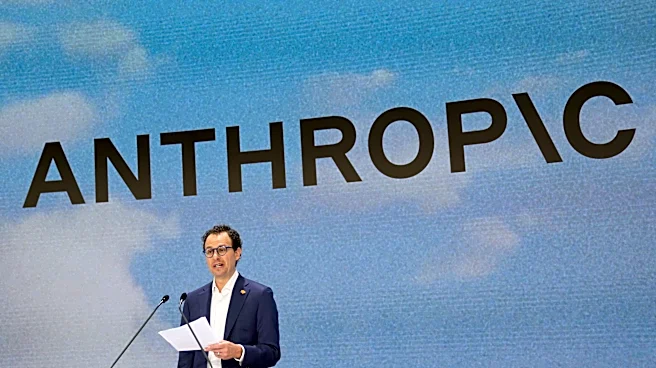
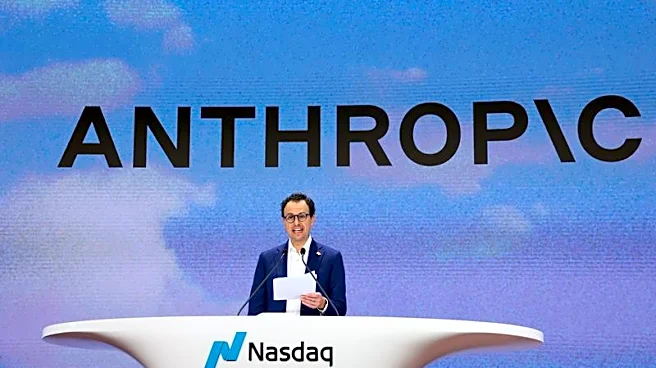
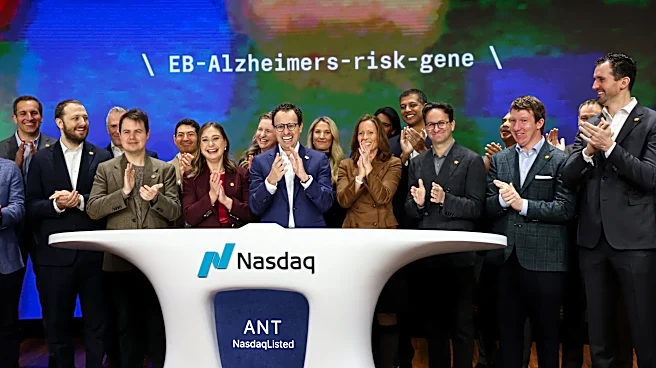
Anthropic, an artificial intelligence company, made its stock market debut on November 19, achieving a record $1.5 trillion valuation. The company's initial public offering (IPO) priced each share at $83, raising $81 billion, making it the largest IPO in history.
Shares closed their first trading day at $97.17, marking a more than 17% increase above the offering price. CEO Dario Amodei emphasized the company's commitment to safety, stating, "There is a gigantic difference between how AI will go if we pay little attention to safety, versus how it will go if we are obsessed with safety." The company's seven co-founders have pledged to donate 80% of their equity, an amount estimated to be worth $112 billion at the IPO price. Additionally, Anthropic is allocating 5% of its shares to a new Public Benefit Fund. These initiatives, combined with staff pledges and company matches, could contribute an estimated $156 billion to philanthropy, according to TechCrunch.
Why It's Important?
Anthropic's record-breaking IPO and its substantial charitable pledges highlight a significant trend in the technology sector, particularly within artificial intelligence, where financial success is being linked with philanthropic endeavors. The potential $156 billion directed towards charity, as estimated by TechCrunch, represents a substantial portion of annual American charitable donations, which were $617 billion in 2025. This could significantly impact various philanthropic sectors, including efforts to combat extreme poverty, as noted by moral philosopher Peter Singer. The company's emphasis on AI safety, articulated by CEO Dario Amodei, also signals a growing awareness and commitment within the industry to responsible AI development, potentially influencing future regulatory discussions and investment priorities in the AI space. The success of this IPO could also set a precedent for future AI companies considering public offerings, potentially encouraging similar philanthropic commitments.
What's Next?
Many Anthropic employees will not be able to sell or donate the majority of their shares until next spring, as reported by The Associated Press, which means the full impact of the pledged donations will unfold over time. Organizations like GiveDirectly are already preparing for increased donations, with its President and CEO Nick Allardice expressing cautious optimism and noting investments made to build supply chains for phones to distribute to recipients. Treasury Secretary Scott Bessent indicated on CNBC that at least one co-founder plans to contribute to Trump Accounts, a savings program for children, in the coming weeks. However, skeptics, as described by the AP, have raised questions about the actual amount that will be available for giving, citing factors such as expensive borrowing, market volatility at Nvidia, and broader warnings about the risks associated with AI. These concerns suggest that the realization of the full charitable potential may face challenges.
Beyond the Headlines
The substantial philanthropic commitments made by Anthropic's founders and the company itself introduce a new dimension to corporate social responsibility within the rapidly expanding AI industry. This move could establish a new benchmark for how tech giants engage with societal impact, moving beyond traditional corporate giving to integrate large-scale wealth redistribution directly into their foundational business models. The focus on AI safety, articulated by CEO Dario Amodei, also underscores a growing ethical consideration within the AI development community. This could lead to increased pressure on other AI firms to not only innovate but also to prioritize ethical guidelines and safety protocols, potentially shaping future industry standards and public expectations. The interplay between immense wealth generation and significant philanthropic pledges in a cutting-edge sector like AI could also spark broader discussions about wealth inequality and the role of private enterprise in addressing global challenges.