




What's Happening?
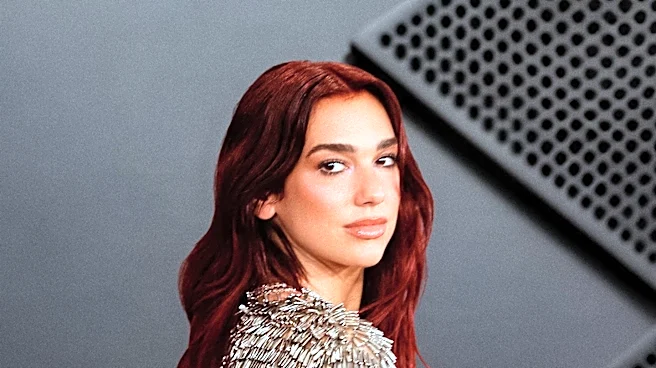
Dua Lipa's latest initiative, the 'Manifesto Library,' a collaboration between her online book club Service95 and Livraria Lello in Porto, is being criticized for perpetuating a misunderstanding of what constitutes a 'banned book.' The project aims to display
and sell a hundred selected books, described as 'banned.' However, the article argues that many of these books, including Jean Raspail’s 'The Camp of the Saints,' have not been strictly 'banned' by governments or educational authorities. Instead, their unavailability often stems from publishers' reluctance to reissue them, booksellers' refusal to stock them, or social pressures, rather than official prohibitions. The American Library Association defines a 'banned book' as one entirely removed from a collection due to a formal or informal challenge, a definition the article suggests is overly broad and can misrepresent the true nature of censorship.
Why It's Important?
This discussion is important as it highlights a nuanced debate surrounding censorship and intellectual freedom within the U.S. and globally. Mischaracterizing books as 'banned' when they are merely out of print or not stocked by certain retailers can dilute the meaning of actual censorship and divert attention from genuine threats to literary access. It also raises questions about the role of public figures and cultural institutions in shaping public discourse around sensitive topics like book banning. For authors, publishers, and readers, understanding the distinctions between various forms of content restriction is crucial for advocating for free expression and challenging legitimate attempts to suppress literature. The project, while well-intentioned, could inadvertently contribute to a broader misunderstanding of the mechanisms and implications of book challenges.
What's Next?
The 'Manifesto Library' project will continue to display and sell its selection of books at Livraria Lello. The ongoing conversation around the definition of 'banned books' is likely to persist, potentially prompting further clarification from organizations like the American Library Association or leading to more precise terminology in public discourse. Cultural figures and institutions involved in similar projects may face increased scrutiny regarding their definitions and claims about literary censorship. This could lead to a more informed public understanding of the complexities of book availability and challenges, distinguishing between market-driven decisions and governmental or institutional prohibitions.
Beyond the Headlines
The deeper implication of this issue lies in the evolving nature of censorship in the digital age and the role of public perception. In an era where information spreads rapidly, the distinction between a book being 'unavailable' due to market forces or editorial decisions versus being 'banned' by an authority can become blurred. This blurring can have significant cultural and ethical consequences, potentially leading to a heightened sense of alarm about censorship where it may not exist in its traditional form, or conversely, overshadowing actual instances of suppression. It also touches upon the responsibility of influencers and platforms in accurately framing such discussions, ensuring that efforts to promote literary awareness do not inadvertently misrepresent the challenges faced by authors and readers.