


What's Happening?
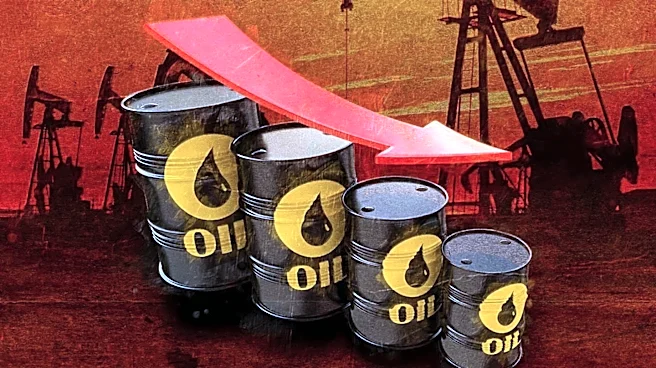
Global oil inventories experienced a substantial decline between February and September 2026, falling by 537 million barrels from a peak of 8,580 million barrels to 8,043 million barrels. This reduction was primarily driven by a significant draw in non-OECD
inventories, which decreased by an estimated 294 million barrels. China accounted for approximately 156 million barrels of this non-OECD decline, with the Middle East contributing 56 million barrels. Additionally, OECD Strategic Petroleum Reserves (SPRs) saw a reduction of 218 million barrels, largely due to an IEA-coordinated release of 426 million barrels that began in March 2026. The United States contributed 133 million barrels to this OECD SPR release. In contrast, OECD commercial oil stocks saw a more modest decline of 24 million barrels, while oil-at-sea inventories remained relatively stable during this period.
Why It's Important?
The significant draw in global oil inventories, particularly from non-OECD countries and OECD SPRs, has critical implications for the U.S. energy market and economy. Reduced inventories can signal a tighter supply-demand balance, potentially leading to higher crude oil prices. This directly impacts U.S. consumers through increased gasoline prices and raises operational costs for various industries dependent on petroleum products. The substantial release from OECD SPRs, including a significant portion from the U.S., indicates a strategic effort to stabilize markets during periods of supply disruption, highlighting the role of these reserves in national energy security. While this action helps mitigate immediate price spikes, sustained draws without replenishment could diminish future response capabilities. U.S. policymakers and businesses must monitor these inventory trends closely, as they are key indicators of market stability and can influence inflation, economic growth, and strategic energy decisions.
What's Next?
The continued monitoring of global oil inventory levels will be crucial for understanding future market dynamics. If non-OECD inventories and strategic reserves continue to decline without a corresponding increase in production or a decrease in demand, upward pressure on oil prices is likely to persist. This could prompt further discussions among international bodies and oil-producing nations regarding supply adjustments. For the U.S., decisions on replenishing its Strategic Petroleum Reserve will become more pressing, balancing the need for energy security with market conditions. The trajectory of global economic growth, particularly in major non-OECD consumers like China, will also play a significant role in determining future inventory movements. Any new supply disruptions or geopolitical events could further exacerbate the current trend of declining inventories, necessitating swift responses from major oil-consuming nations.
Beyond the Headlines
The substantial decline in non-OECD inventories, particularly in China, points to a growing demand or supply-side vulnerability in these regions. This trend could indicate a shift in global energy consumption patterns or highlight the increasing importance of non-OECD nations in influencing global oil market stability. The reliance on strategic reserves, especially in the U.S., underscores the fragility of the current energy landscape in the face of disruptions. While SPR releases provide short-term relief, they are not sustainable long-term solutions for structural supply imbalances. This situation could accelerate investments in alternative energy sources and energy efficiency measures in the U.S. and other developed nations, aiming to reduce dependence on volatile global oil markets. Furthermore, it may prompt a re-evaluation of international energy cooperation frameworks to better manage global supply shocks and ensure energy security for all major economies.