




What's Happening?
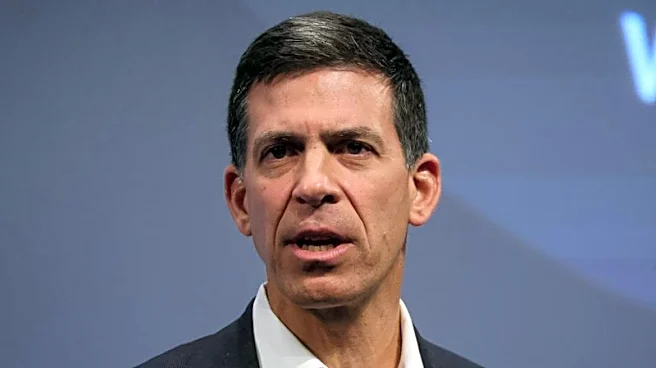
Goldman Sachs President and Chief Operating Officer John Waldron is at the center of ongoing discussions regarding the succession of CEO David Solomon. While the bank emphasizes that no definitive timeline has been established for a leadership transition,
reports from The Wall Street Journal suggest a scenario where Waldron could become CEO in late 2027 or 2028. Under this potential plan, Solomon might transition into an executive chairman role for a period following his departure as CEO. Goldman Sachs spokesperson Tony Fratto has stated that the board regularly discusses succession, as disclosed in their filings, but any assertions about specific timing are speculative. Waldron has been with Goldman Sachs for over 25 years, serving as President and COO since 2018, the same year Solomon became CEO. He also holds a position on the Board of Directors. This renewed focus on Waldron comes after a period where he was reportedly in serious talks with other investment firms, leading Goldman Sachs to issue a significant retention award to both Waldron and Solomon in 2025.
Why It's Important?
The potential leadership transition at Goldman Sachs is significant for the financial industry, given the firm's prominent role in global investment banking. A smooth succession from David Solomon to John Waldron, who have worked closely for years, could signal stability and continuity for the institution. However, the discussions also highlight the competitive landscape for top talent in finance, as evidenced by the substantial retention awards given to Waldron and Solomon to prevent their departure to rival firms like Apollo Global Management. This situation underscores how major financial institutions are increasingly competing with private equity firms not only for business but also for executive talent. The future CEO's strategic direction, particularly concerning the balance between traditional investment banking and the growing asset and wealth management divisions, as well as the integration of artificial intelligence, will shape Goldman Sachs' trajectory and potentially influence broader industry trends.
What's Next?
While Goldman Sachs maintains there is no definitive timeline, the ongoing discussions suggest a potential leadership change could occur as early as late 2027 or 2028. The plan would likely involve David Solomon transitioning to an executive chairman role for one to two years, ensuring a gradual handover. The board's approval is still required for any formal succession plan. Investors will be closely watching for further announcements and the third-quarter earnings report, which could provide insights into the firm's financial health and strategic direction under potential new leadership. John Waldron's focus on integrating AI into Goldman Sachs' workflows, as seen with the 'OneGS 3.0' initiative, indicates that technological advancements will likely be a key area of emphasis for the next CEO. The timing of Solomon's eventual exit, particularly in relation to the vesting of his and Waldron's retention awards in January 2030, will also be a point of interest for governance observers.
Beyond the Headlines
The succession discussions at Goldman Sachs reveal deeper shifts within the financial industry, particularly the evolving nature of investment banking and the intense competition for top executives. The substantial retention awards, now valued at approximately $120 million for both Waldron and Solomon, illustrate the lengths to which major banks will go to secure talent against aggressive poaching from private equity firms. This trend suggests that executive compensation structures in traditional banking are increasingly mirroring those in alternative asset management, with a focus on long-term, stock-based incentives. Furthermore, the emphasis on artificial intelligence as a strategic priority for the next CEO, particularly Waldron's bullish stance on 'agentic AI,' points to a future where technological innovation will be central to maintaining competitiveness and efficiency in the banking sector. The narrative also highlights the personal journey of John Waldron, who was initially rejected by Goldman Sachs due to a failed math test, only to rise through the ranks and become the leading candidate for CEO, showcasing a non-traditional path to the pinnacle of Wall Street.