







What's Happening?
The International Energy Agency (IEA) has reported a narrowing of the projected copper supply gap for 2035, from 30% to 25%, due to expansions and life extensions of existing mines. However, the copper supply chain faces significant challenges, particularly
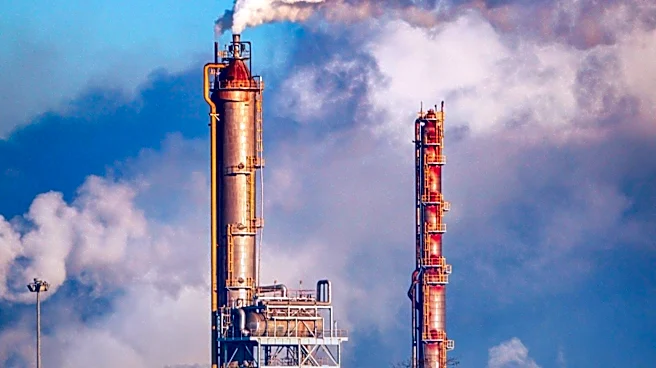
in smelting capacity. The financial and physical breakdown of smelters, especially outside China, poses a risk to the copper supply. The benchmark fee for processing copper concentrate has dropped to zero, and many smelters are operating below capacity. This situation is exacerbated by China's dominance in smelting capacity, which has led to a competitive environment where processing fees have been driven down.
Why It's Important?
The narrowing of the copper supply gap is crucial for industries reliant on copper, such as electrification and data centers. However, the fragility of the smelting process highlights a critical bottleneck in the supply chain. The financial strain on smelters could lead to closures, impacting global copper availability and prices. This situation underscores the need for innovative solutions to process copper more efficiently and sustainably. The reliance on a few centralized smelters makes the supply chain vulnerable to disruptions, which could have far-reaching economic implications.
What's Next?
To address the challenges in the copper supply chain, there is a need for alternative processing methods that reduce dependence on traditional smelting. Companies like Still Bright are exploring new leaching methods that could allow for more localized processing, reducing the need for large smelters. If successful, these innovations could transform the copper industry by making it more resilient and sustainable. Policymakers and industry leaders may need to collaborate to support the development and implementation of these technologies to ensure a stable copper supply for future demand.