





What's Happening?
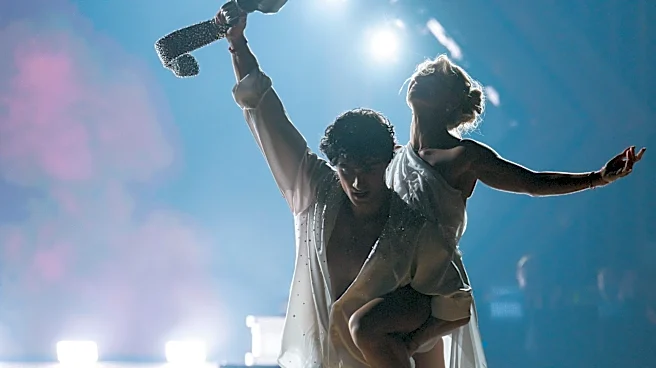
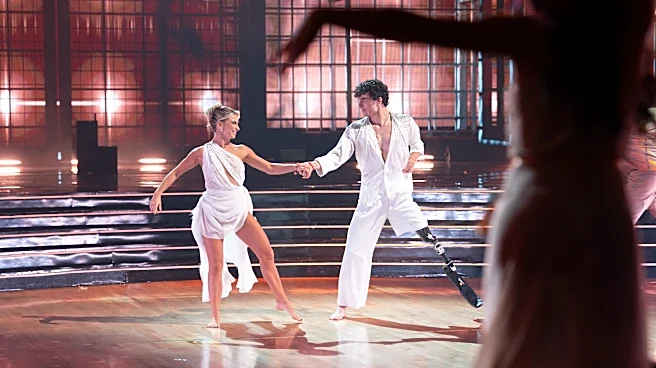
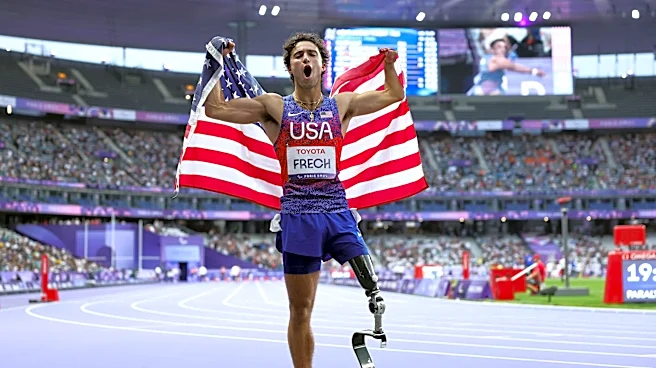
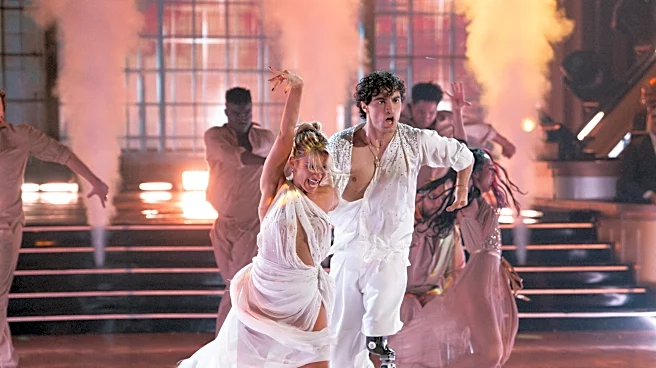
During the 'Dancing With the Stars' Season 35 finale, contestant Ezra Frech experienced a prosthetic mishap during his freestyle routine. Frech, an above-the-knee amputee, had his running blade detach accidentally after leaping off the ballroom stairs
and into the arms of backup dancers. This occurred despite a creative choice to begin the performance with his prosthetic intentionally off, which he and his partner, Daniella Karagach, had planned. Frech calmly reattached his prosthetic and continued the routine without missing a beat, even performing lifts while balancing on one leg. His resilience and professionalism were highlighted throughout the performance, which ultimately earned him the Mirrorball trophy. The incident underscored his consistent compelling performances throughout the season, where his choreography was adapted to accommodate his prosthetic.
Why It's Important?
Ezra Frech's performance in the 'Dancing With the Stars' finale holds significant importance beyond the competition itself. His ability to overcome a technical difficulty on live television, particularly one related to his prosthetic, serves as a powerful message of resilience and determination. For viewers, especially those with disabilities, Frech's composure and continued excellence can be deeply inspiring, challenging perceptions of physical limitations. His journey on the show, adapting choreography for his prosthetic, has already brought increased visibility and understanding of the capabilities of individuals with disabilities. This incident further amplifies that message, demonstrating that unforeseen challenges can be met with grace and strength, potentially fostering greater inclusivity and representation in mainstream media and entertainment.
Beyond the Headlines
The incident with Ezra Frech's prosthetic on 'Dancing With the Stars' transcends a mere performance hiccup, delving into deeper societal implications regarding disability and public perception. It highlights the often-unseen challenges faced by individuals with prosthetics and how they navigate daily life, let alone high-pressure performance environments. Frech's immediate and calm response, rather than allowing the mishap to derail his performance, showcased an extraordinary level of adaptability and mental fortitude. This moment could contribute to a broader cultural shift, encouraging a more nuanced understanding of disability not as a limitation, but as a different way of experiencing and interacting with the world, often accompanied by remarkable resilience and innovative problem-solving. It also underscores the importance of inclusive design and choreography in entertainment, ensuring that all participants can showcase their talents authentically.