





What's Happening?
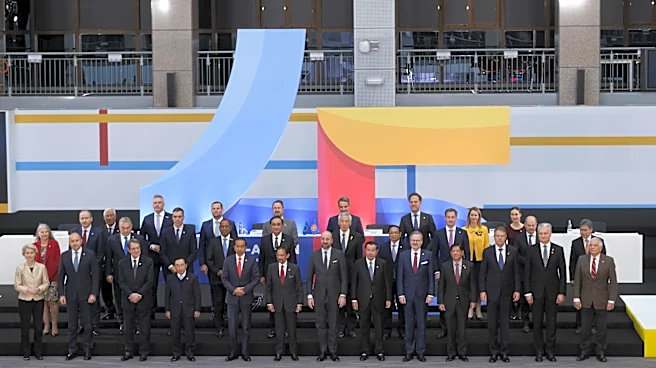
On November 21, 2026, Indonesia and the European Union (EU) formally signed two significant agreements: the Indonesia–EU Comprehensive Economic Partnership Agreement (IEU-CEPA) and the Investment Protection Agreement (IPA). These agreements, the culmination
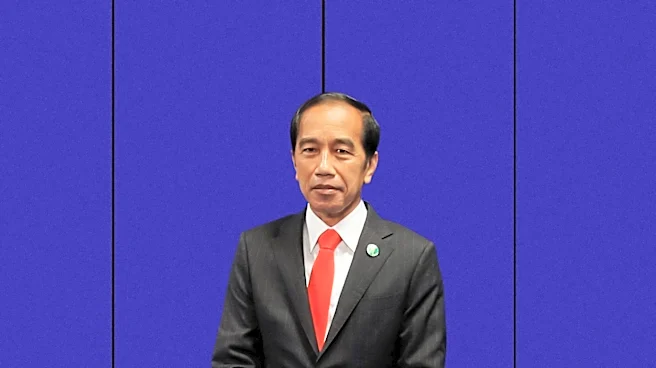
of nine years of negotiations, were signed by EU Trade Commissioner Maroš Šefčovič, Indonesian Trade Minister Budi Santoso, and Indonesia’s Coordinating Minister for Economic Affairs, Airlangga Hartarto. The IEU-CEPA aims to facilitate trade by reducing or removing import duties on over 98% of tariff lines for goods between both parties. The IPA is designed to protect investors from discrimination, denial of justice, and unlawful asset seizure, while also allowing free repatriation of profits and requiring compensation for public asset acquisition. The European Commission projects that the IEU-CEPA could generate an additional €27 billion in economic output for Indonesia and €16 billion for the EU by 2042.
Why It's Important?
These agreements are poised to significantly reshape trade and investment flows between Indonesia and the EU, fostering deeper economic integration. For EU companies, the IEU-CEPA will make it easier to sell goods and services, trade online, and establish businesses in Indonesia. Key provisions include duty-free entry for most EU machinery, electrical equipment, and pharmaceuticals, and a phased elimination of duties on EU-made vehicles. EU food exporters will benefit from the removal of tariffs on dairy products, and European refiners could see reduced costs for Indonesian palm oil. The IPA provides crucial legal certainty and protection for EU investors in Indonesia, encouraging greater foreign direct investment. Conversely, Indonesian goods will gain enhanced access to the EU market. This economic partnership is expected to stimulate growth, create jobs, and enhance competitiveness for businesses on both sides, while also potentially diversifying supply chains and reducing reliance on other major trading blocs.
What's Next?
Both agreements are anticipated to apply provisionally in early 2027, with full entry into force targeted for the first quarter of 2027, pending ratification. Indonesia plans to expedite ratification through a presidential regulation, aiming for tariff cuts to commence on January 1, 2027, when it exits the EU’s tariff preference scheme. However, full ratification on the EU side requires consent from the European Parliament, followed by final approval from the EU Council, which could introduce delays. From December 30, 2026, large and medium-sized EU importers of certain Indonesian goods, including palm oil, coffee, and rubber, will be subject to EU deforestation checks, requiring them to trace products to their origin plots and confirm legal production without post-2020 forest clearing. These upcoming steps will be critical in determining the precise timeline and initial impact of the agreements.
Beyond the Headlines
Beyond the immediate economic benefits, these agreements carry broader implications for global trade dynamics and sustainability. The inclusion of deforestation checks on Indonesian imports signals a growing trend in international trade agreements to incorporate environmental standards, potentially influencing sustainable practices in commodity production. This could set a precedent for future trade deals, pushing countries to adopt more environmentally responsible policies. Furthermore, the IEU-CEPA and IPA strengthen the EU's economic ties in Southeast Asia, a region of increasing geopolitical and economic importance, potentially diversifying its trade relationships away from traditional partners. The agreements also highlight the evolving nature of trade negotiations, which now frequently encompass not only tariff reductions but also investment protection, digital trade, and environmental considerations, reflecting a more holistic approach to international economic cooperation.