






What's Happening?
Filmmaker James Gray's new crime thriller, 'Paper Tiger,' starring Adam Driver, Miles Teller, and Scarlett Johansson, is set in 1980s New York and draws heavily from Gray's own teenage memories. The film centers on wealthy former police officer Gary Pearl
(Driver) who convinces his engineer brother Irwin (Teller) to enter a business venture that goes awry. This business connects them to the Russian mob, leading to violence and deceit that strains the brothers' relationship and Irwin's marriage to his wife, played by Johansson. The bleak narrative is rooted in Gray's family history, including his father's legal troubles and criminal conviction. Gray aimed for faithfulness to real-life events while taking narrative liberties, acknowledging the challenges of objectivity when close to the subject matter. The film also explores themes of parenthood, a shift Gray attributes to his own experience as a father of three.
Why It's Important?
The release of 'Paper Tiger' is significant for the film industry as it showcases a director delving into deeply personal and autobiographical themes within a crime drama framework. James Gray's approach to storytelling, where he meticulously recreates a past era and personal history, offers a unique cinematic experience. The film's exploration of family dynamics under extreme pressure, coupled with its gritty 1980s New York setting, resonates with audiences interested in character-driven narratives and historical context. The involvement of acclaimed actors like Adam Driver, Miles Teller, and Scarlett Johansson also elevates the film's profile, potentially drawing a wider audience and contributing to its critical and commercial success. This type of filmmaking can influence other directors to explore personal histories, enriching the diversity of stories told in mainstream cinema.
What's Next?
Following its release, 'Paper Tiger' will likely be a subject of critical review and audience discussion, particularly regarding its autobiographical elements and the performances of its lead actors. The film's success could further solidify James Gray's reputation as a director capable of crafting intricate, personal narratives within genre films. Industry observers will be watching its box office performance and critical reception to gauge its impact. The film's themes of family, crime, and the challenges of parenthood may also spark broader conversations about the influence of personal history on artistic creation. Depending on its reception, 'Paper Tiger' could be a contender for film awards, further highlighting its significance in the current cinematic landscape.
Beyond the Headlines
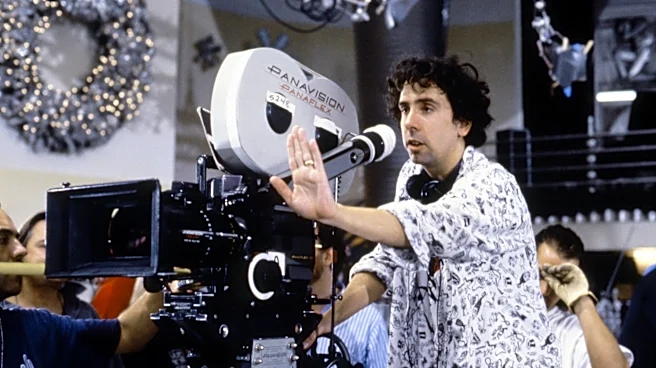
Beyond its immediate release, 'Paper Tiger' delves into the complex ethical and psychological dimensions of adapting personal trauma and family history into art. Gray's struggle with objectivity while portraying his own past raises questions about the responsibility of filmmakers when dealing with real-life events and the potential impact on those involved. The film's use of old-school technology, such as tungsten lights and celluloid film, also highlights a broader trend in cinema to embrace traditional filmmaking techniques for aesthetic and thematic purposes, contrasting with the prevalence of digital production. This choice underscores a deliberate artistic vision that seeks to evoke a specific era and mood, contributing to a richer, more immersive storytelling experience. The film's exploration of parental mistakes and their long-term effects offers a poignant reflection on the enduring legacy of family dynamics.