
What's Happening?
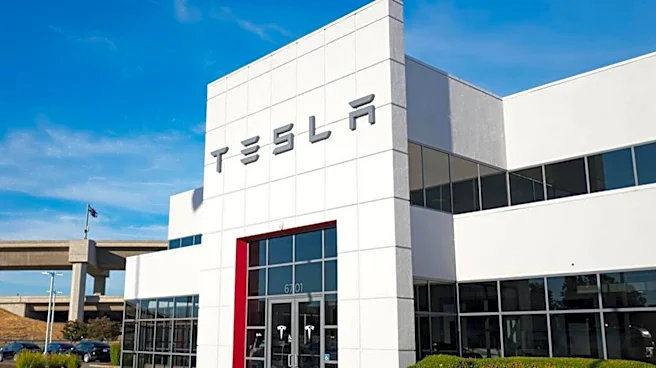
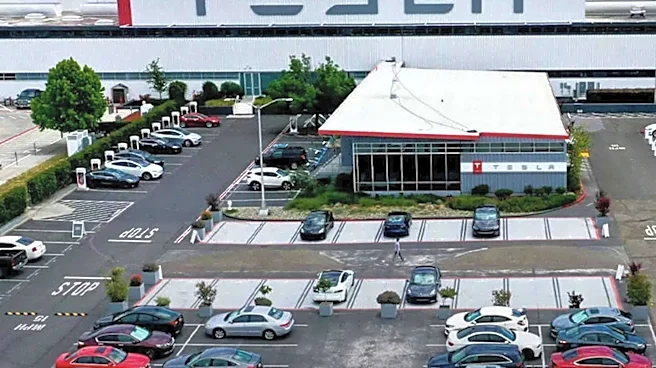
Tesla and SpaceX have reportedly appointed five directors to special committees to oversee potential merger negotiations. The Financial Times identified Tesla's Robyn Denholm, Kathleen Wilson-Thompson,
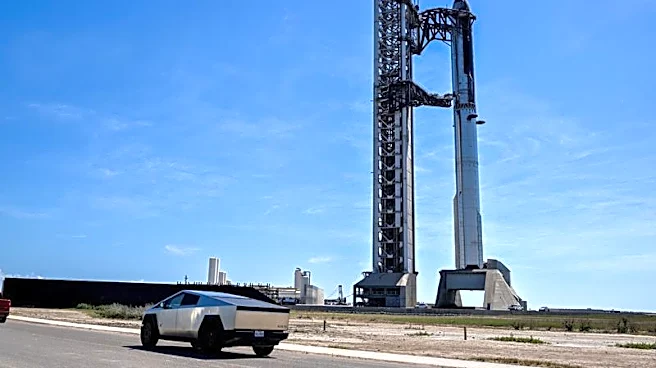
and Jack Hartung, alongside SpaceX's Roelof Botha and Randy Glein, as the appointed individuals. These appointments aim to advance discussions between the two companies, both led by Elon Musk. The committees have engaged financial institutions, with Morgan Stanley and Goldman Sachs advising SpaceX, and Evercore advising Tesla, to develop financial models for a potential merger structured as a share exchange. These models will help determine the ownership split for shareholders in a combined entity and identify areas of business overlap. While no merger agreement has been announced, Musk previously stated in October that combining his interests in AI, robotics, electric vehicles, and aerospace under one corporate structure would be beneficial. Research firm Morningstar has highlighted that a significant valuation gap between the two companies could pose a major hurdle, with SpaceX estimated at nearly $2 trillion and Tesla at $1.5 trillion as of late October.
Why It's Important?
The potential merger between Tesla and SpaceX carries significant implications for the U.S. business landscape, particularly in the technology and automotive sectors. A combined entity could create a formidable force in artificial intelligence, robotics, electric vehicles, and aerospace, potentially accelerating advancements in these fields. For Tesla investors, the valuation discrepancy is a critical concern, as Morningstar suggests they might resist terms that value Tesla below SpaceX, impacting the proposed ownership split. The financial profiles of the companies also differ, with SpaceX's valuation reflecting future growth expectations despite negative free cash flow, while Tesla has demonstrated positive free cash flow. This difference could influence how shareholders assess any proposed exchange. Furthermore, the merger could face scrutiny from U.S. and Chinese authorities due to Tesla's manufacturing operations in China and SpaceX's role as a U.S. defense contractor, potentially complicating regulatory approval and impacting international business relations.
What's Next?
The appointed special committees, advised by their respective banks, will continue to develop financial models and negotiate the terms of a potential share exchange. A key focus will be to bridge the valuation gap between Tesla and SpaceX to arrive at an ownership split acceptable to shareholders of both companies. The committees must also address potential regulatory objections, particularly concerning the implications of combining a U.S. defense contractor with a company having significant operations in China. While the director appointments signal progress in discussions, they do not constitute an agreement to merge. Future steps will involve detailed financial analysis, shareholder engagement, and navigating complex regulatory landscapes. The outcome of these negotiations will determine whether a combined entity can be formed and how it might reshape the future of several high-tech industries.
Beyond the Headlines
Beyond the immediate financial and operational considerations, a merger between Tesla and SpaceX could trigger broader shifts in corporate strategy and innovation. The integration of their respective strengths in AI, advanced manufacturing, and space technology could lead to unprecedented synergies, potentially accelerating the development of new products and services. For instance, Tesla's expertise in AI and autonomous systems could contribute to SpaceX's orbital data centers, while SpaceX's satellite network could support Tesla's ambitions in autonomous driving and robotics. However, the ethical and legal dimensions of such a powerful combined entity, particularly concerning data privacy, market dominance, and national security implications given SpaceX's defense contracts, would likely come under intense scrutiny. The long-term impact on competition within the automotive, aerospace, and technology sectors could be substantial, potentially fostering new industry standards or creating new monopolies.