
What's Happening?
AT&T Inc. (NYSE:T), a major U.S. telecom operator and S&P 500 member, is currently trading at a Price-to-Earnings (P/E) multiple that is below both the broader telecom sector and its direct peer group.
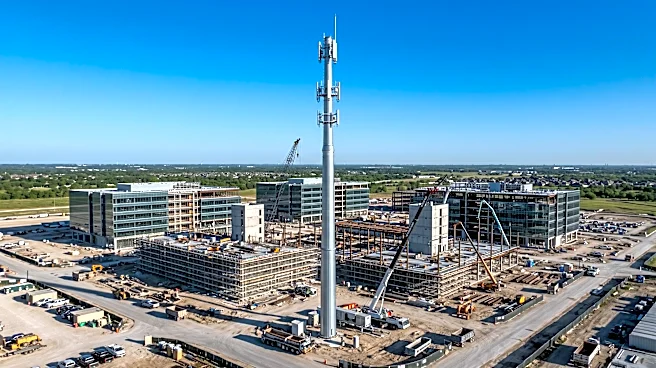
This valuation comes despite a significant increase in its share price over the past several years, reflecting the company's strategic focus on its core connectivity businesses. The company operates one of the largest wireless and fiber networks in the United States, providing mobile phone services, data plans, and high-speed internet. A recent pullback in its stock price has prompted a closer examination of its valuation relative to its profitability. AT&T's business is anchored by its nationwide wireless network, serving a large base of postpaid customers, and its expanding fiber network, which delivers high-speed internet to homes and businesses. The company has also committed capital to a new corporate headquarters campus, indicating long-term planning for its operations.
Why It's Important?
AT&T's valuation metrics are significant for investors and the broader telecommunications industry. A P/E ratio below its peers suggests that the market may be applying a more conservative view of the company's future earnings potential or growth prospects compared to its competitors. This could indicate an undervaluation, potentially attracting value investors, or it could reflect market concerns about specific aspects of its business, such as competition, capital expenditure requirements for fiber expansion, or subscriber growth trends. For consumers, AT&T's strategic focus on wireless and fiber expansion means continued investment in network infrastructure, potentially leading to improved service quality and broader availability of high-speed internet. The company's financial health and market perception directly influence its ability to invest in these critical areas, impacting the competitive landscape of the U.S. telecom market.
What's Next?
Several factors are poised to influence AT&T's trajectory and valuation in the coming months. Key among these are wireless subscriber trends, which will directly impact revenue and profitability. Continued expansion of its fiber network is expected to support growth in home connectivity, but the pace and cost of this expansion will be crucial. The company's ability to maintain cost discipline will affect its margins, while cash generation will dictate its capital allocation priorities, including further network investments or shareholder returns. The competitive environment in both wireless and broadband markets will also play a significant role in shaping pricing strategies and market share. The upcoming quarterly update will provide critical insights into how these factors are developing and will likely influence market sentiment and the stock's valuation moving forward.
Beyond the Headlines
The current valuation of AT&T, trading below its peers, highlights a broader market dynamic within the mature telecommunications sector. Investors are increasingly scrutinizing the balance between stable, utility-like revenue streams from established services and the significant capital expenditures required for next-generation infrastructure like 5G and fiber optics. This situation raises questions about how the market values long-term infrastructure investments versus immediate profitability. The commitment to a new headquarters campus, while a long-term strategic move, also ties up capital that could otherwise be used for network upgrades or debt reduction. The ongoing competition with other major players in both wireless and broadband forces AT&T to continuously innovate and invest, creating a complex financial tightrope walk between maintaining market share and delivering shareholder value. The market's measured view of AT&T's results could also reflect broader concerns about the saturation of the U.S. telecom market and the potential for slowing growth in core services.