



What's Happening?
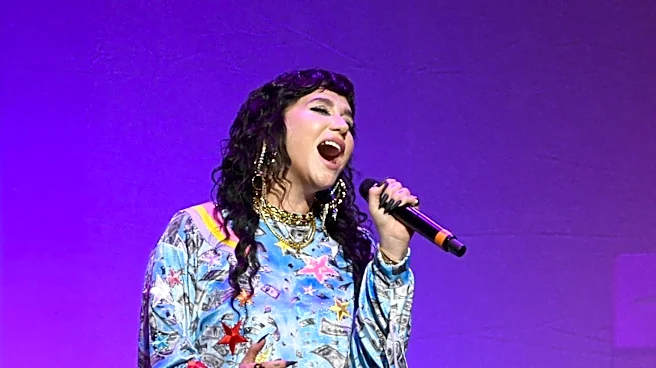
Kesha has released the music video for her song 'Backstabber' from the vault, 16 years after its original release in early January 2010. The video is being presented for the first time, offering a glimpse into the unfiltered fashion and stylistic choices
of the early 2000s. The song, which gained renewed popularity through TikTok trends in 2021, features Kesha's signature autotuned techno sound and raw ad-libs. The music video visually narrates the song's origin story, which stems from a friend stealing Kesha's car, using dramatized acting and bold visual elements like smokey eye makeup and geometric street dance choreography. The use of persistent backlighting in neon-electric orange and cobalt blue creates strong silhouettes, emphasizing the raw energy and emotion of the performance.
Why It's Important?
The release of Kesha's 'Backstabber' music video is significant for several reasons. It taps into a growing nostalgia for early 2000s culture, a period whose fashion and music styles are currently experiencing a resurgence. For fans, it provides a long-awaited visual component to a song that has resonated across different age groups. The video's authentic portrayal of early 2000s aesthetics offers a counterpoint to what some perceive as the 'overproduced' and 'degraded' fast fashion interpretations of the era today. This release could influence current media trends by encouraging a return to more candid and less filtered creative choices, potentially inspiring artists and creators to revisit and re-evaluate past works for their timeless appeal and genuine expression.
What's Next?
The release of the 'Backstabber' music video may spark further interest in Kesha's earlier works and potentially encourage other artists to unearth and share previously unreleased content. It could also fuel discussions about authenticity in media and fashion, prompting a re-evaluation of how past trends are reinterpreted in the present. The video's success in resonating with a contemporary audience, particularly through platforms like TikTok, suggests that content with genuine emotional and stylistic roots can achieve lasting relevance. This could lead to a broader trend of artists and labels exploring their archives for material that aligns with current cultural appetites for nostalgia and genuine expression.
Beyond the Headlines
Beyond its immediate impact, the 'Backstabber' music video's release highlights a deeper cultural phenomenon: the cyclical nature of trends and the enduring appeal of authenticity. In an era often criticized for its fast-paced, disposable fashion and content, the video serves as a reminder of a time when artistic expression, even in its rawest forms, was celebrated. It implicitly critiques the current state of 'fast fashion' and its impact on quality and originality. The video's visual storytelling and unpolished aesthetic could inspire a shift towards valuing genuine artistic intent over commercial polish, fostering a more critical appreciation for the origins and evolution of popular culture.