






What's Happening?
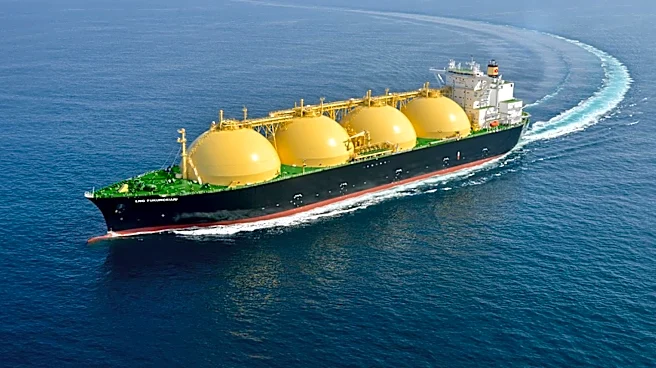
The global container ship orderbook has surpassed 15 million Twenty-foot Equivalent Units (TEUs), with LNG dual-fuel vessels accounting for a growing share of newbuilding capacity. According to Alphaliner, the orderbook is expected to approach 16 million TEUs by
the end of 2026, with an additional 40 'megamax' newbuilding contracts anticipated from major carriers like Maersk, Yang Ming, CMA CGM, and MSC. LNG dual-fuel tonnage has dominated orders in 2024, 2025, and 2026, representing 56% of contracted newbuildings. In contrast, methanol dual-fuel orders account for 12%, and conventionally powered ships, while still making up 88% of the current fleet, have seen their orderbook share decline to just under 32%. This indicates a significant shift towards alternative propulsion systems in the maritime industry.
Why It's Important?
This substantial shift in the container ship orderbook towards LNG dual-fuel vessels has significant implications for the U.S. maritime industry and its environmental goals. The adoption of cleaner-burning fuels like LNG can help reduce greenhouse gas emissions from shipping, aligning with U.S. and international efforts to combat climate change. For U.S. ports and infrastructure, this trend necessitates investments in LNG bunkering facilities and related support services to accommodate the new generation of vessels. It also presents opportunities for U.S. companies involved in LNG production, distribution, and maritime technology. The move away from conventional propulsion reflects a global commitment to sustainability, which will influence regulatory frameworks and operational standards for all vessels calling at U.S. ports, potentially impacting trade routes and logistics costs.
What's Next?
The trend of LNG dual-fuel vessels dominating new orders is expected to continue, with Alphaliner projecting an additional 1.0 million TEUs in LNG dual-fuel newbuilding pipeline before the year's end. This will further solidify LNG as the preferred alternative to conventional power in the short to medium term. The industry will likely see ongoing research and development into other alternative fuels and propulsion technologies to meet increasingly stringent environmental regulations. For the U.S., this means continued adaptation of port infrastructure and regulatory frameworks to support these advanced vessels. The long-term success of this transition will depend on the availability and cost-effectiveness of alternative fuels, as well as the development of a robust global bunkering network. The focus will also be on ensuring the safety and operational efficiency of these new technologies.
Beyond the Headlines
The overwhelming preference for LNG dual-fuel vessels in the container ship orderbook signifies a pivotal moment in the maritime industry's journey towards decarbonization. This shift is not merely a technological upgrade but a profound ethical and environmental commitment to reducing the ecological footprint of global trade. It highlights the industry's response to growing public and regulatory pressure to address climate change. Legally, this trend will likely drive the development of new international standards and certifications for alternative fuel vessels and their associated infrastructure. Culturally, it could foster a new generation of maritime professionals skilled in operating and maintaining advanced, environmentally friendly technologies. The long-term implications include a potential reshaping of the global energy landscape, with increased demand for LNG and a push for further innovation in sustainable shipping solutions, ultimately contributing to a greener future for global commerce.