




What's Happening?
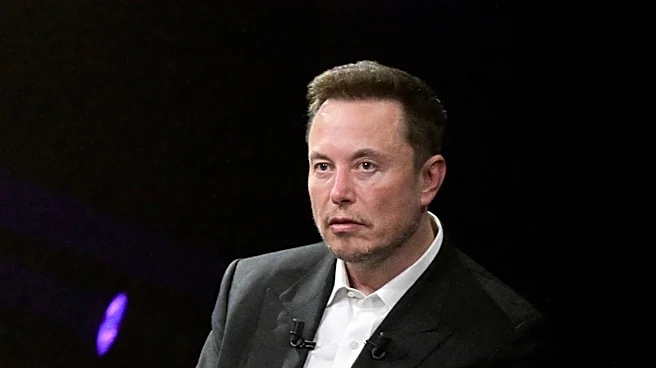
Delta Air Lines CEO Ed Bastian and SpaceX CEO Elon Musk are engaged in a public dispute regarding Delta's choice of in-flight Wi-Fi provider. Delta opted for Amazon's Leo service over Starlink, a decision that has drawn sharp criticism from Musk. According
to reports, Bastian allegedly stated at company events, "We do not want to be with Elon Musk. Trust me," and "If you know his reputation, it's all true what they say about him." These comments followed Musk's earlier remarks on X, where he suggested Delta's internet service was poor and that the airline would "lose a lot of customers" for not adopting Starlink. Musk has since escalated the feud by stating that Bastian "will lose his job" over this decision. Delta's stock has seen a slight decline amidst this controversy, with a 1.7% drop over the week, though it gained 0.3% in premarket trading.
Why It's Important?
This public disagreement highlights the intense competition in the in-flight connectivity market and the strategic decisions airlines face regarding passenger experience. Starlink is currently recognized as the fastest and most readily available in-flight internet solution, with competitors like United, Southwest, American, and Alaska Airlines rapidly adopting it. Delta's decision to partner with Amazon's Leo, which is still in development and not expected to enter beta until next year, could potentially leave it trailing rivals in providing a crucial amenity. Passengers increasingly expect reliable and fast internet access during flights, and a perceived lag in this area could impact Delta's customer satisfaction and competitive standing. The feud also underscores the influence of prominent figures like Elon Musk in public discourse and their ability to impact corporate reputations and market perceptions.
What's Next?
The immediate future will likely see continued scrutiny of Delta's in-flight Wi-Fi strategy and the performance of Amazon's Leo service once it becomes available. Delta plans to equip only about half of its fleet with Leo, and its performance will be closely watched by both passengers and industry observers. If Leo experiences delays or underperforms compared to Starlink, Delta could face increased pressure to re-evaluate its decision or risk losing market share to competitors offering superior connectivity. The ongoing public exchange between Bastian and Musk may also continue to unfold, potentially influencing public perception of both Delta and Starlink. Satellite communications consultants suggest that Musk's aggressive stance might be an attempt to deter other airlines from choosing competing, potentially cheaper, solutions.
Beyond the Headlines
This dispute extends beyond a simple business decision, touching upon the personal dynamics between corporate leaders and the broader implications for technological adoption in the aviation industry. The alleged personal reasons cited by Bastian for avoiding a partnership with Musk introduce an unusual element into a corporate technology decision, suggesting that personal reputations can significantly influence strategic choices. Furthermore, the incident highlights the growing importance of in-flight connectivity as a differentiator for airlines, moving from a luxury to an expected standard. The choice between established, albeit slower, systems and newer, high-speed satellite internet services like Starlink represents a significant technological shift that could redefine passenger expectations and competitive landscapes in air travel for years to come.