





What's Happening?
Fluor Corporation, a company listed on the NYSE, has received full authorization to proceed with its engineering, procurement, and construction management agreement for the fourth grinding line expansion project at the Sierra Gorda copper-molybdenum mine
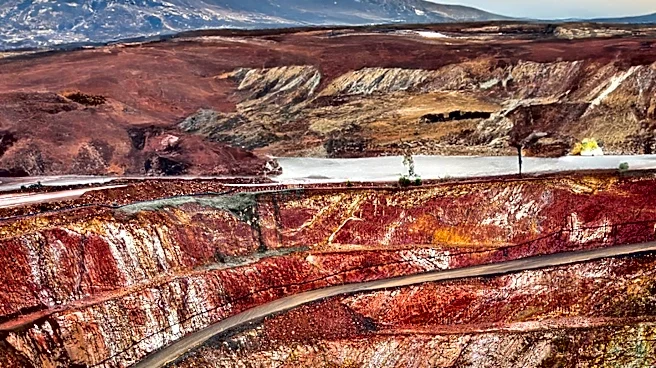
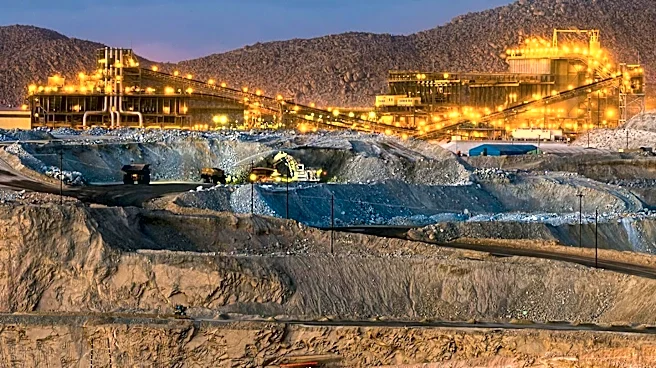
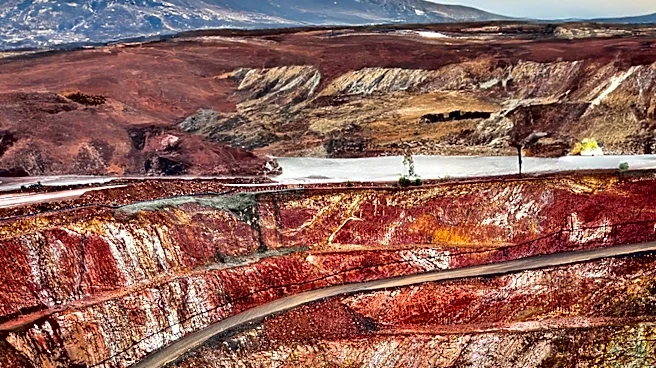
in Chile. This mine, operated by Sierra Gorda Sociedad Contractual Minera (SGSCM), is a large-scale open-pit operation located approximately 60 km south of Calama in Chile's Antofagasta Region. Harish Jammula, president of Fluor's mining and metals business, expressed pride in continuing the company's long-standing relationship with SGSCM. Construction on this brownfield expansion is slated to commence in 2027. The project's scope includes the addition of a new primary crusher, a high-pressure grinding roll crusher, fine ore grinding, flotation, and all necessary support facilities. The primary objective of this expansion is to increase the concentrator's ore-processing capacity from its current 130,000 tonnes per day (t/d) to 165,000 t/d. Fluor will recognize the undisclosed contract value in the third quarter of 2026.
Why It's Important?
This expansion project by Fluor Corporation at the Sierra Gorda mine signifies a substantial investment in the global copper and molybdenum supply chain. Copper is a critical metal for various industries, including electronics, construction, and renewable energy technologies, making its increased production vital for global economic growth and technological advancement. Molybdenum is also a key component in steel alloys, contributing to the strength and corrosion resistance of various industrial materials. The increased processing capacity will allow SGSCM to extract more valuable minerals, potentially impacting global commodity prices and the availability of these essential resources. For Fluor, securing this contract reinforces its position as a leading engineering and construction firm in the mining sector, particularly in South America. The project also highlights the ongoing demand for advanced mining infrastructure and technology to optimize resource extraction and efficiency.
What's Next?
Construction work for the fourth grinding line expansion is scheduled to begin in 2027. Over the next few years, Fluor Corporation will be engaged in the detailed engineering, procurement of equipment, and management of the construction phases. This will involve significant logistical coordination and deployment of resources to the remote mining site in Chile. Once operational, the expanded facilities are expected to boost the Sierra Gorda mine's output of copper and molybdenum concentrates, which will then be processed further or sold on international markets. The success of this project could lead to further expansion opportunities for Fluor in the region and potentially influence other mining companies to invest in similar capacity-increasing initiatives to meet growing global demand for these metals. Stakeholders will be closely watching the project's progress and its eventual impact on production volumes and market dynamics.
Beyond the Headlines
The expansion of the Sierra Gorda mine by Fluor Corporation also touches upon broader themes of resource management and sustainable mining practices. As global demand for critical minerals like copper and molybdenum continues to rise, the efficiency and environmental impact of mining operations become increasingly scrutinized. While the immediate focus is on increasing capacity, such large-scale projects often involve considerations for water usage, energy consumption, and waste management. The long-term implications could include advancements in mining technology to reduce environmental footprints, as well as potential shifts in global supply chains as major producers like Chile increase their output. Furthermore, the project underscores the strategic importance of Chile as a key player in the global mining industry, attracting significant foreign investment and contributing to its national economy. The development could also spur local economic activity through job creation and demand for support services.