





What's Happening?
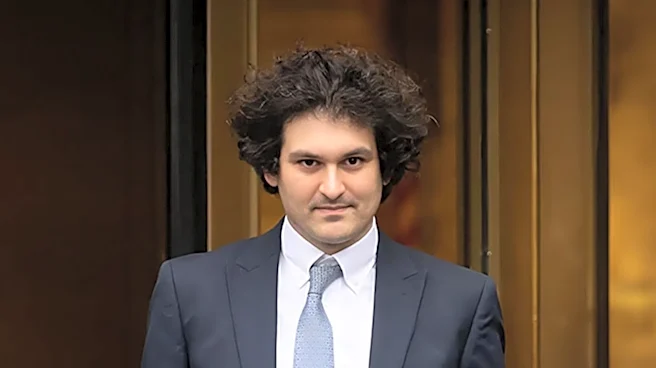
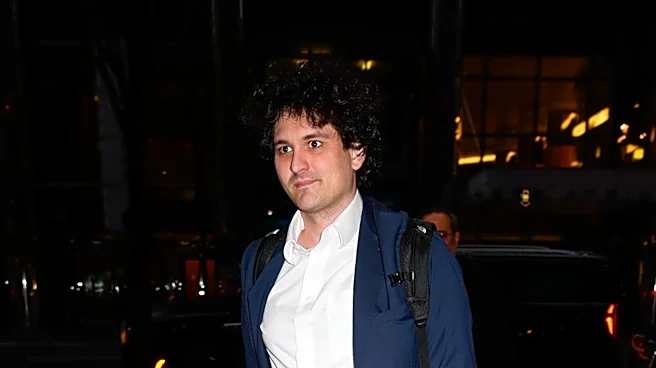
Two new television productions, Amazon's 'The Boy Who Stole Billions?' and Netflix's 'The Altruists,' are set to explore the rise and fall of Sam Bankman-Fried, the founder of the cryptocurrency exchange FTX. Both shows delve into Bankman-Fried's near-decade-long
career, his global movements from the U.S. to Hong Kong and the Bahamas, and his associates, including Caroline Ellison. A central theme in both productions is the philosophical movement of effective altruism, which Bankman-Fried championed. 'The Boy Who Stole Billions?' is a three-part documentary by Nanette Burstein, featuring archival footage and jailhouse interviews with Bankman-Fried. In contrast, 'The Altruists' is a scripted, eight-episode dramedy created by Graham Moore, broadly based on New York magazine reporting. The Netflix series portrays Bankman-Fried and Ellison's relationship and their involvement in the FTX scandal with a creative license, while the Amazon documentary offers a more traditional, fact-based account. Bankman-Fried was convicted in November 2023 for illegally appropriating $8 billion in FTX customer money and sentenced to 25 years in federal prison.
Why It's Important?
The release of these two productions highlights the significant impact of the FTX collapse on the U.S. financial landscape and public perception of cryptocurrency. The scandal, involving the misappropriation of billions of dollars in customer funds, led to Bankman-Fried's conviction and a 25-year prison sentence, sending a clear message about accountability in the crypto industry. The shows' focus on effective altruism also brings to light the ethical complexities and potential misinterpretations of philosophical movements when applied to high-stakes financial endeavors. For U.S. investors and the broader public, these narratives serve as a cautionary tale about the risks associated with unregulated financial markets and the importance of due diligence. The differing approaches of the documentary and scripted series offer varied perspectives on the events, allowing for a more comprehensive understanding of the human and systemic factors that contributed to one of the largest financial frauds in recent history. The case continues to influence regulatory discussions and investor confidence in the evolving digital asset space.
What's Next?
The release of 'The Boy Who Stole Billions?' and 'The Altruists' is expected to reignite public discussion and scrutiny of the cryptocurrency market and the ethical implications of 'effective altruism.' While Bankman-Fried is currently serving a 25-year sentence, these productions will likely shape public opinion and potentially influence future regulatory actions in the U.S. regarding digital assets. The narratives presented in these shows could also impact how the public views other figures associated with the FTX scandal and the broader crypto industry. Furthermore, the ongoing legal and financial repercussions of the FTX collapse, including efforts to repay defrauded users, will continue to unfold. The sale of Bankman-Fried's Anthropic stake for $1.34 billion, which went towards repaying FTX users, demonstrates the complex process of asset recovery in such cases. The productions may also prompt further examination of the role of venture capital and investment firms in supporting companies with questionable ethical foundations.
Beyond the Headlines
Beyond the immediate financial and legal ramifications, the FTX saga, as depicted in these new productions, raises profound questions about the intersection of ambition, ethics, and technological innovation. The concept of 'effective altruism,' which Bankman-Fried claimed to espouse, is critically examined, revealing how a philosophy aimed at maximizing societal good can be distorted to rationalize illicit activities. This case underscores the psychological aspects of financial fraud, particularly the self-perception of individuals in positions of immense power and wealth. The differing portrayals of Bankman-Fried and his associates in the documentary and scripted series highlight the challenge of capturing complex realities and the potential for media to influence public understanding of such events. The story also serves as a cultural touchstone, reflecting societal anxieties about unchecked technological growth, the allure of quick wealth, and the erosion of trust in financial institutions, both traditional and novel. The long-term implications could include a re-evaluation of ethical frameworks in business and technology, and a greater emphasis on transparency and accountability in emerging markets.