









What's Happening?
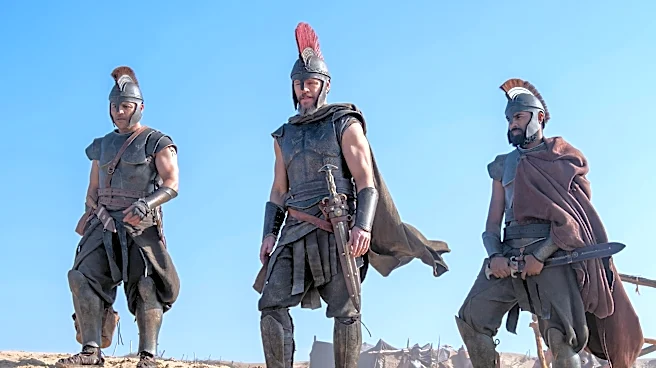
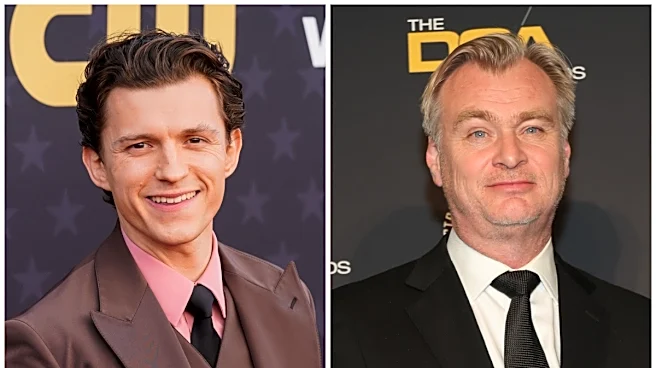
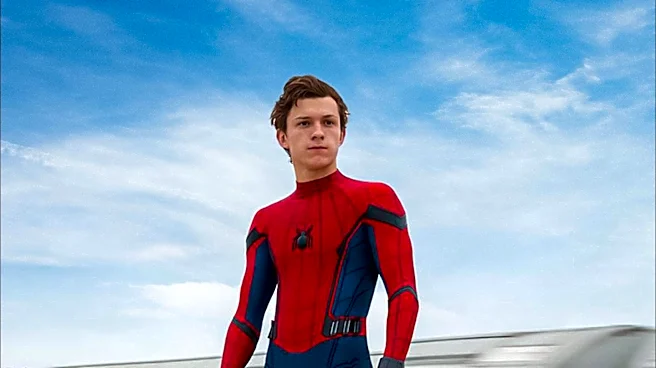
Christopher Nolan's latest film, 'The Odyssey,' is set to release on July 17, offering a modern adaptation of the ancient epic poem attributed to Homer. The film stars Matt Damon as Odysseus, Anne Hathaway as Penelope, and Tom Holland as Telemachus, among
others. Nolan, known for his epic storytelling, has taken on the challenge of bringing this classic tale to the big screen with a budget of $250 million. The film was shot over 91 days across six countries, utilizing an authentic Viking ship for maritime scenes. Nolan emphasizes the film's intimacy and accessibility, aiming to resonate with contemporary audiences while staying true to the original narrative. The film also features a star-studded cast, including Zendaya and Charlize Theron, and is the first feature shot entirely on IMAX.
Why It's Important?
Nolan's adaptation of 'The Odyssey' is significant as it brings a foundational text of Western literature to a modern audience, potentially sparking renewed interest in classical stories. The film's large-scale production and use of IMAX technology highlight the evolving capabilities of cinematic storytelling. By casting well-known actors, Nolan aims to make the ancient tale relatable, which could influence future adaptations of classical literature. The film's exploration of themes such as love, loss, and the human condition may resonate with viewers, offering a reflection on timeless human experiences. This project also underscores the film industry's ongoing trend of revisiting and reimagining classic narratives for contemporary audiences.
What's Next?
Following its release, 'The Odyssey' is expected to generate discussions on the adaptation of classical literature in modern cinema. The film's performance at the box office and its reception by critics and audiences will likely influence future projects of a similar nature. If successful, it could pave the way for more large-scale adaptations of ancient texts, encouraging filmmakers to explore other classical stories. Additionally, the film's use of IMAX technology may set a precedent for future productions, pushing the boundaries of how epic narratives are visually presented. The industry will be watching closely to see how Nolan's approach to storytelling impacts both the artistic and commercial aspects of filmmaking.