



What's Happening?
Gold prices are experiencing a period of stabilization, with a potential for a relief rally, as markets anticipate a 25-basis-point rate hike from the Federal Reserve. Jesse Colombo, an independent precious metals analyst, suggests that a 25-basis-point hike has
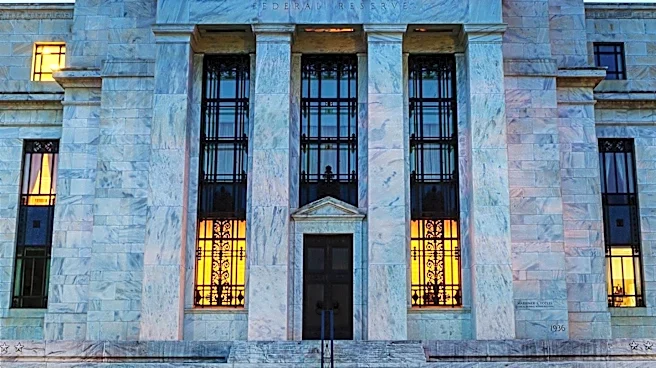
been priced in for about a month, and the market would be relieved if it's not a surprise 50-basis-point increase. However, Colombo emphasizes that Federal Reserve Chairman Kevin Warsh's tone will be a crucial factor. Warsh is known for 'jawboning' the market, using verbal communication to influence expectations without necessarily resorting to aggressive rate hikes. His hawkish tone, particularly since Jackson Hole, has already significantly impacted commodity markets. Market participants are reportedly hoping Warsh might soften his stance in light of recent market turmoil and sell-offs, but he has consistently maintained a tough verbal approach to achieve his goal of reducing inflation.
Why It's Important?
The influence of Federal Reserve Chairman Kevin Warsh's communication style on market behavior, particularly in the gold market, highlights the significant power of central bank rhetoric. His 'jawboning' strategy, which aims to manage inflation expectations through verbal cues rather than solely through direct policy actions, demonstrates how non-tangible factors can profoundly impact asset prices. For investors in precious metals and other commodities, understanding the nuances of Fed communication is as critical as analyzing economic data. A hawkish tone, even without substantial rate hikes, can create a risk-averse environment, leading to sell-offs and price suppression. Conversely, any softening of this tone could trigger a 'relief rally.' This dynamic underscores the psychological aspect of financial markets and how investor sentiment, heavily influenced by central bank leaders, can drive significant capital reallocations. The current situation illustrates that the Fed's communication strategy is a powerful tool, capable of shaping market outcomes and influencing investment decisions across various sectors of the U.S. economy.
What's Next?
Market participants are in a holding pattern, awaiting the Federal Reserve's December rate decision and, more importantly, Chairman Kevin Warsh's subsequent remarks. Jesse Colombo suggests that many investors will likely wait until after the Fed meeting to make significant moves, particularly in the gold market, due to concerns that Warsh might maintain a hawkish tone and further depress prices. A stabilization of gold prices around current support levels, followed by a break above previous resistance, would be seen as a sign of strength. The outcome of the Fed meeting and Warsh's tone will determine whether a 'Santa Claus rally' materializes into Christmas. If the Fed delivers a 25-basis-point hike without an overly aggressive verbal stance, it could provide the catalyst for a relief rally in gold and other markets.
Beyond the Headlines
The ongoing impact of Federal Reserve Chairman Kevin Warsh's 'jawboning' strategy on market dynamics raises broader questions about the transparency and predictability of central bank policy. While verbal intervention can be an effective tool for managing expectations and achieving policy goals, it also introduces an element of subjectivity and potential for misinterpretation. This approach could lead to increased market volatility if investors struggle to discern the true intent behind the rhetoric. Furthermore, it highlights the evolving nature of central banking in the digital age, where every public statement is scrutinized and amplified across global financial networks. The reliance on verbal cues rather than explicit 'forward guidance' could also challenge the democratic accountability of the Fed, as policy signals become less formal and more open to individual interpretation. This situation underscores the delicate balance central bankers must strike between guiding markets and maintaining institutional clarity.