





What's Happening?
Volkswagen is exploring the development of its own body-on-frame truck platform for the U.S. market if ongoing discussions with Ford Motor Company or other automakers regarding cooperation in the rugged SUV and pickup segments do not materialize. This
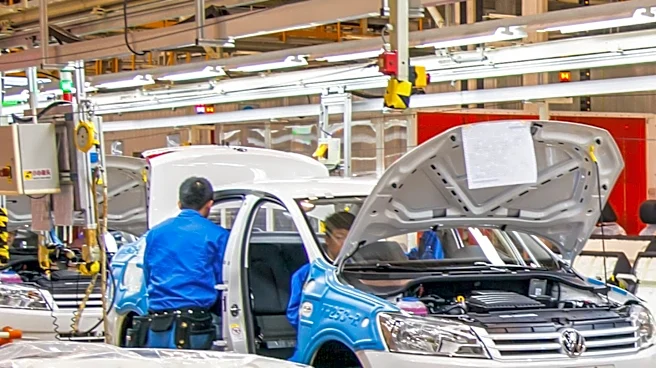
strategic consideration is part of Volkswagen's broader effort to strengthen its U.S. business, which has historically underperformed compared to the group's expectations. CEO Oliver Blume has identified North America as a significant growth opportunity, particularly in the rugged SUV and pickup categories where Volkswagen currently has a limited presence. The company is also increasing the responsibility of its North American management and pursuing greater local production, with its Scout Motors business already constructing a factory in South Carolina for SUVs and pickups.
Why It's Important?
This potential move by Volkswagen is significant for the U.S. automotive market, as it signals a determined effort by a major global automaker to capture a larger share of the highly profitable truck and SUV segments. Developing a standalone platform would represent a substantial investment and a long-term commitment to the U.S. market, potentially increasing competition and offering more choices for consumers in these popular vehicle categories. For Volkswagen, success in this segment could significantly boost its U.S. sales and profitability, helping to offset challenges in other markets or segments. The decision also highlights the strategic importance of local production to mitigate risks like tariffs and supply chain disruptions, aligning with a broader trend of automotive localization in the U.S.
What's Next?
Volkswagen executives anticipate making a final decision on the truck platform by the end of the year, indicating that discussions with Ford are in a critical phase. If an agreement with Ford or another partner is reached, Volkswagen might proceed with a collaborative approach, leveraging existing expertise and resources. However, if talks fail, the company is prepared to invest in its own platform, which would involve significant research, development, and manufacturing efforts. This decision will also influence the trajectory of Volkswagen's Scout Motors brand and its South Carolina factory. Concurrently, Volkswagen is also considering local production for Audi models in the U.S., a decision that is being evaluated separately but also aims to strengthen its North American presence and reduce vulnerability to tariffs.
Beyond the Headlines
Volkswagen's strategic dilemma regarding a U.S. truck platform reflects deeper shifts in the global automotive industry. The emphasis on rugged SUVs and pickups underscores the continued strong demand for these vehicle types in the U.S., even as the industry transitions towards electrification. This move also highlights the challenges faced by European automakers in adapting their product portfolios to diverse regional market preferences. Furthermore, the consideration of a standalone platform versus a partnership with Ford illustrates the complex dynamics of collaboration and competition among major automotive players. Such decisions have long-term implications for technological development, manufacturing footprints, and the competitive landscape, potentially leading to new alliances or intensified rivalries in the pursuit of market dominance.