








What's Happening?
SpaceX has announced a halt on accepting new commercial rideshare bookings for its Sun-Synchronous Orbit (SSO) Transporter series and mid-inclination Bandwagon missions beyond late 2028. This decision comes amid severe manifest saturation and a strategic
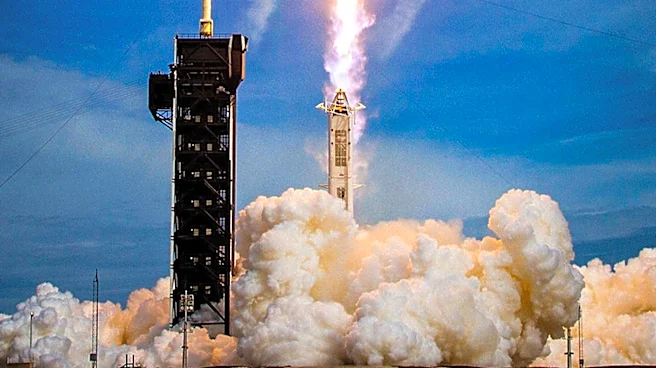
shift in internal payload priorities. SpaceX is reallocating its launch infrastructure to focus on deploying the next-generation Starlink constellation and building orbital artificial intelligence data centers. The recent Transporter-17 mission successfully launched 81 customer payloads into low-Earth orbit, highlighting the company's capacity but also underscoring the logistical challenges faced by small satellite operators.
Why It's Important?
The suspension of new rideshare bookings by SpaceX creates a significant bottleneck for small satellite operators, who have relied on the company's affordable and predictable launch services. This move could lead to increased launch costs and deployment delays for startups, potentially altering the economic landscape for emerging remote sensing and communications constellations. The decision also opens up opportunities for other launch providers to fill the gap left by SpaceX, potentially revitalizing the global small-lift launcher market.
What's Next?
With SpaceX's rideshare pipeline closing, other launch providers in the US, Europe, and Asia are likely to capitalize on the opportunity to absorb the displaced demand. These competitors may offer alternative launch solutions to small satellite operators, potentially leading to increased competition and innovation in the industry. SpaceX's focus on internal projects like Starlink and AI data centers suggests a strategic shift that could influence the company's future market positioning and partnerships.