





What's Happening?
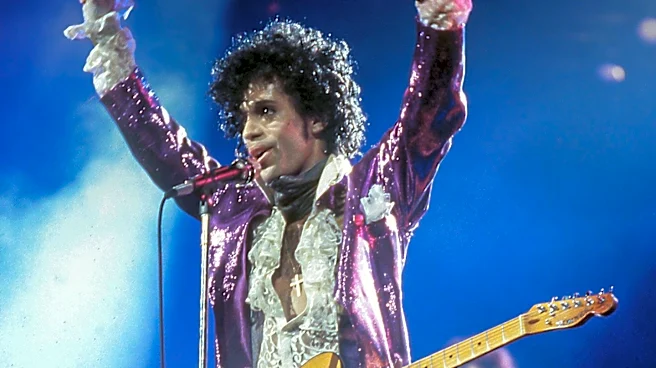
The Prince Estate has issued a statement clarifying that the newly released song 'Calabama,' featured on the 'Timeless' collection, includes overdubs of a real horn section. This clarification comes after fan complaints regarding a lack of transparency
and conflicting statements from estate representatives. Initially, Charles Spicer, Jr., a representative of the Prince Estate, stated that 'nothing was added, nothing was edited' on the 'Timeless' album. However, album credits listed horn players Greg Boyer, Adrian Crutchfield, and Lynn Grissett on 'Calabama,' with Crutchfield and Grissett not believed to have played with Prince until nearly a decade after the song's original recording in 2003. Trombonist Greg Boyer later confirmed recording the horn parts 'a couple of months ago.' The Estate's new statement explains that Prince's original vocal calls for 'horns' were filled by a synthesizer in the archived multitrack, and a group of horn players who worked with Prince were assembled to overdub the intended horn line, consistent with Prince's production approach. The Estate assures that all of Prince's recorded parts remain intact and no other overdubs or AI were used on 'Timeless.'
Why It's Important?
This situation highlights the complex challenges and ethical considerations involved in managing and releasing posthumous music from iconic artists. The controversy underscores the importance of transparency from estates to maintain trust with dedicated fan bases who are deeply invested in the artist's original vision. Discrepancies in information, even if later clarified, can lead to accusations of altering an artist's work, potentially diminishing the perceived authenticity of new releases. For the music industry, this incident serves as a reminder of the delicate balance between honoring an artist's legacy and making previously unreleased material accessible. It also raises broader questions about artistic integrity and the extent to which estates should complete or modify unfinished works, especially when the artist is no longer able to provide input. The Estate's promise for more detailed information in future releases indicates a recognition of these concerns.
What's Next?
The Prince Estate has committed to providing more details regarding future music releases to enhance transparency, suggesting a shift in their communication strategy. This could involve more explicit disclosures about the production process, including any additions or modifications made to original recordings. Fans will likely scrutinize future releases more closely, expecting the promised level of detail. The ongoing release of music from Prince's extensive vault is expected to continue, with the Estate emphasizing that even unfinished works should be shared. This incident may also prompt other artist estates to re-evaluate their own transparency policies when releasing posthumous material, potentially leading to industry-wide discussions on best practices for preserving and presenting an artist's legacy. The debate over artistic intent versus commercial viability in posthumous releases will likely persist.
Beyond the Headlines
The controversy surrounding 'Calabama' delves into the philosophical debate about artistic completion and the role of an estate in interpreting an artist's unfinished work. Prince was known for his meticulous control over his music, making any posthumous alterations particularly sensitive for his fans. The Estate's justification—that the overdubs were consistent with Prince's production approach and fulfilled his vocal cues for horns—attempts to align the additions with his artistic intent. However, the fact that these parts were recorded years after his death by musicians who may not have played on the original track raises questions about authenticity. This situation reflects a broader tension in the art world: how much intervention is acceptable when presenting an artist's legacy, especially when the artist cannot approve the final product? It also highlights the emotional connection fans have to an artist's original creations and their desire for unadulterated access to their idol's work.