





What's Happening?
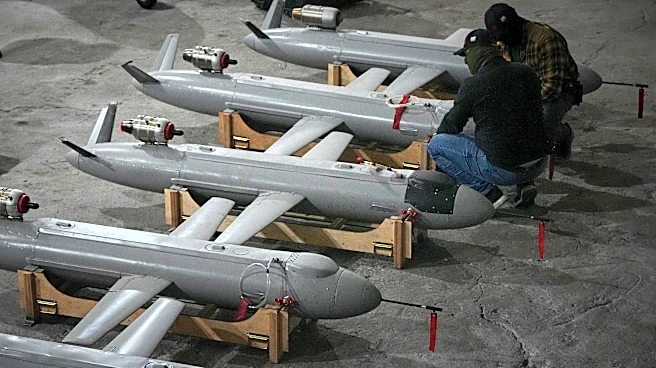
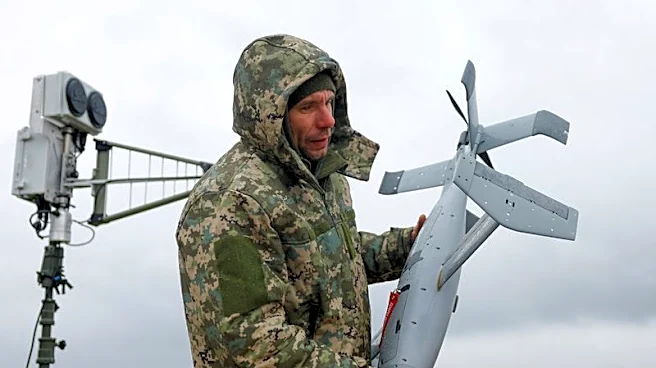
Shield AI has developed an autonomy software called Hivemind, which significantly improves the precision of munitions in real-world conflicts. According to Ryan Tseng, President of Shield AI, the software has been integrated into various loitering attack
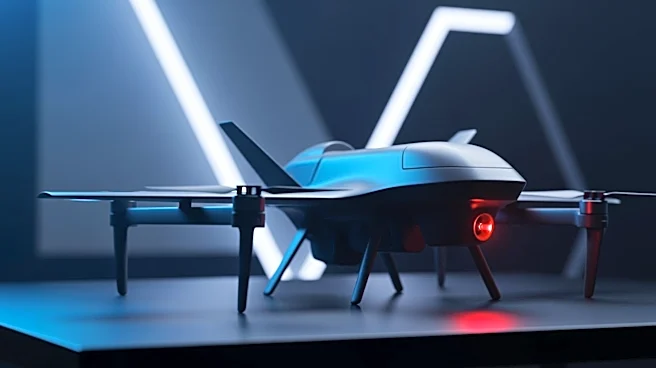
munitions, achieving a probability-of-kill (Pk) rate of over 75%. This marks a substantial improvement from previous GPS-guided munitions, which had Pk rates of less than 5% due to enemy interference with navigation systems. The software's effectiveness has been demonstrated in conflicts such as the ongoing war in Ukraine. At the Eurosatory trade show, Shield AI announced a collaboration with Destinus, a Netherlands-based munitions startup, to integrate Hivemind into Destinus's Hornet drone interceptor and Ruta cruise missile.
Why It's Important?
The introduction of Shield AI's Hivemind software represents a significant advancement in military technology, particularly in the field of autonomous weapons. By enhancing the precision of munitions, the software could potentially alter the dynamics of modern warfare, providing military forces with more reliable and effective tools. This development is particularly relevant for the U.S. defense industry, which is constantly seeking to maintain technological superiority. The improved precision of munitions could lead to more efficient military operations, reducing collateral damage and increasing mission success rates. Additionally, the collaboration between Shield AI and Destinus highlights the growing trend of international partnerships in defense technology, which could lead to further innovations and strategic advantages.
What's Next?
Following the successful integration of Hivemind software into various munitions, Shield AI and Destinus plan to continue their collaboration, focusing on further enhancing the capabilities of the Hornet drone interceptor and Ruta cruise missile. This partnership may lead to the development of new autonomous weapon systems, potentially influencing military strategies and procurement decisions. As the software's effectiveness becomes more widely recognized, other defense contractors and military organizations may seek to adopt similar technologies, driving further advancements in autonomous weaponry. The ongoing conflict in Ukraine and other global tensions may accelerate the demand for such innovations, prompting additional research and development efforts in the field.