



What's Happening?
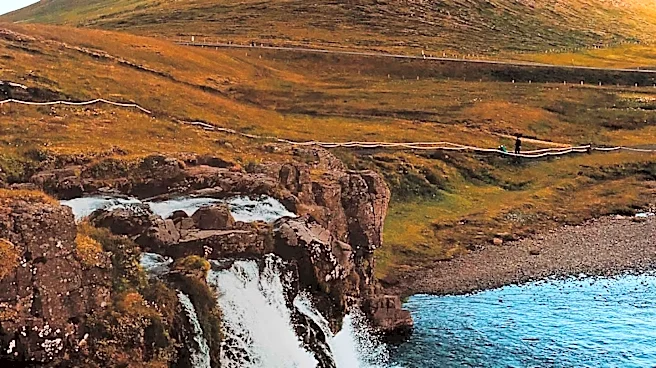
A recent analysis of over 24,000 traveler comments reveals that Iceland's 'hidden gems,' particularly in the Highlands and Westfjords, are highly rated by visitors and offer a quieter alternative to popular tourist spots. Kerlingarfjöll Mountains emerged
as the top-scoring hidden gem, with other notable locations including Askja Caldera and Þórsmörk Valley. These less-frequented sites often receive similar high ratings to famous attractions but with significantly fewer reviews, indicating less crowding. Travelers frequently complain about crowds at well-known sites, with negative sentiment rising from 16.4% at quiet attractions to 20.4% at the busiest. The study also highlights that small natural pools are often preferred over large commercial lagoons, and small towns receive overwhelmingly positive feedback.
Why It's Important?
For the U.S. tourism industry and American travelers, these findings underscore a growing desire for authentic, less crowded travel experiences. As popular international destinations become increasingly saturated, there's a clear market for promoting 'hidden gems' within the U.S. This could encourage American tourism boards to identify and market lesser-known national parks, rural areas, and small towns that offer unique cultural and natural attractions. It also suggests that U.S. tour operators could develop itineraries focusing on these quieter destinations, appealing to travelers seeking solitude and a deeper connection with nature and local culture. The preference for natural pools over commercial ones might also influence the development of eco-tourism and sustainable travel initiatives in the U.S., emphasizing natural beauty and minimal environmental impact.
What's Next?
The insights from this study could prompt a strategic shift in how U.S. travel destinations are marketed. Expect to see increased promotion of off-the-beaten-path locations and experiences that emphasize tranquility and authenticity. Travel companies may begin to curate more specialized tours to these 'hidden gems,' potentially leading to a redistribution of tourist traffic away from overcrowded hotspots. Local communities in these less-visited areas might experience an economic boost, but they will also need to consider sustainable tourism practices to preserve the very qualities that make them attractive. Furthermore, there could be a greater focus on collecting and analyzing traveler sentiment to better understand preferences and tailor offerings, moving beyond simple star ratings to capture the nuances of visitor satisfaction, particularly regarding crowd levels.
Beyond the Headlines
The phenomenon of 'hidden gems' gaining popularity and then potentially becoming crowded themselves presents a paradox for sustainable tourism. As more travelers seek out these quieter spots, the very essence of what makes them 'hidden' is threatened. This raises ethical questions about the responsibility of travel media and tour operators in promoting such locations. There's a delicate balance between economic development for local communities and preserving the pristine nature and solitude that attracts visitors. The long-term implication could be a continuous search for new, undiscovered places, leading to a cycle of discovery and eventual over-tourism. This also highlights a cultural shift in travel, where experiences are increasingly valued over mere sightseeing, and the desire for unique, personal encounters drives destination choices, pushing travelers further into less explored territories.