





What's Happening?
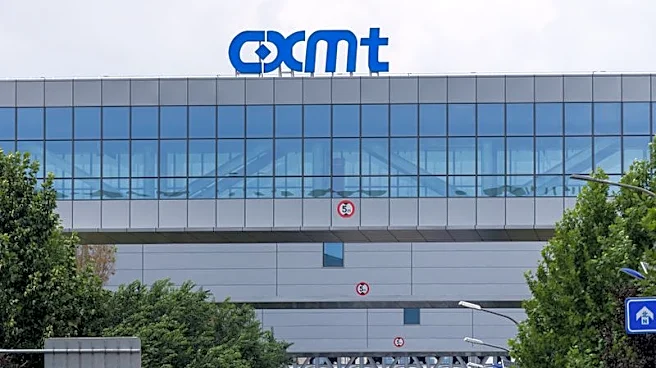
China's ChangXin Memory Technologies (CXMT) announced a substantial profit of 54 billion yuan (US$8.11 billion) in the third quarter, marking its first quarterly profit since its initial public offering (IPO) in July. This financial success is attributed
to surging demand for memory chips, driven by the artificial intelligence (AI) sector, which has led to higher prices. CXMT's IPO in Shanghai in July raised 58 billion yuan (US$8.71 billion), making it Asia's largest IPO this year, and its shares surged more than fivefold in their debut. The company reported a net profit attributable to shareholders of 54.4 billion yuan for the three months ending September 30. Its gross margin increased by 1.94 percentage points from the previous quarter to 89.53%, benefiting from increased prices, higher sales volumes, and reduced per-chip costs. CXMT, China's leading DRAM supplier by revenue, has capitalized on rivals like SK Hynix, Samsung Electronics, and Micron Technology prioritizing higher-value products such as high-bandwidth memory (HBM).
Why It's Important?
CXMT's impressive quarterly profit underscores the immense demand for memory chips, particularly those used in AI processors, and highlights China's growing influence in the global semiconductor industry. The company's ability to achieve such significant profitability shortly after its IPO, despite a competitive landscape, demonstrates its strategic positioning and the robust market for DRAM and HBM. This development is crucial for the U.S. semiconductor industry and its stakeholders, as it signifies increasing competition from Chinese manufacturers. As CXMT plans to begin limited production of HBM3E chips, even with initial lower manufacturing yields, it indicates a determined push to capture a larger share of the high-performance memory market. This could intensify the global race for technological supremacy in AI-related hardware, potentially impacting pricing, innovation cycles, and market share for U.S. companies like Micron Technology. The substantial cash reserves accumulated by CXMT also suggest aggressive expansion plans, including new chip factories, which could further reshape the global semiconductor supply chain.
What's Next?
CXMT is reportedly planning to commence limited production of HBM3E chips within the next two months, despite current manufacturing yields of only 20% to 30%. This move signals the company's ambition to compete in the high-performance memory segment crucial for AI applications. The company's significant cash reserves of 285.16 billion yuan as of September 30 are earmarked for expansion, including the construction of new chip factories in Beijing, Shanghai, and Hefei, which could double its monthly capacity to approximately 600,000 12-inch wafers. CXMT is also preparing to enter the NAND flash-memory market, further diversifying its product offerings. These expansion efforts, coupled with ongoing research and development in its sixth-generation manufacturing technology, indicate a sustained push for growth and market dominance. However, the sustainability of the AI investment boom and its impact on stock valuations remain a concern for investors, as CXMT's shares have already seen a 32% decline from their August peak.
Beyond the Headlines
CXMT's rapid ascent and significant profitability highlight the strategic importance of domestic semiconductor production for China, particularly in the context of global technological competition and supply chain vulnerabilities. The company's focus on DRAM and HBM, critical components for AI, positions it at the forefront of a rapidly evolving technological landscape. The reported lower manufacturing yields for HBM3E chips, compared to industry leaders like SK Hynix, underscore the challenges and investments required to achieve parity in advanced semiconductor manufacturing. This situation could lead to increased government support and R&D efforts within China to close the technological gap. For the U.S., CXMT's expansion represents a critical development in the ongoing tech rivalry, potentially influencing trade policies, intellectual property disputes, and strategic alliances in the semiconductor sector. The long-term implications could include a more fragmented global semiconductor market and increased pressure on U.S. companies to innovate and maintain their competitive edge.