






What's Happening?
Uber Technologies, Inc. announced its third-quarter 2026 financial results, reporting GAAP earnings of 25 cents per share, which fell short of the Zacks Consensus Estimate of 94 cents. However, non-GAAP earnings reached 88 cents per share, marking a 35%
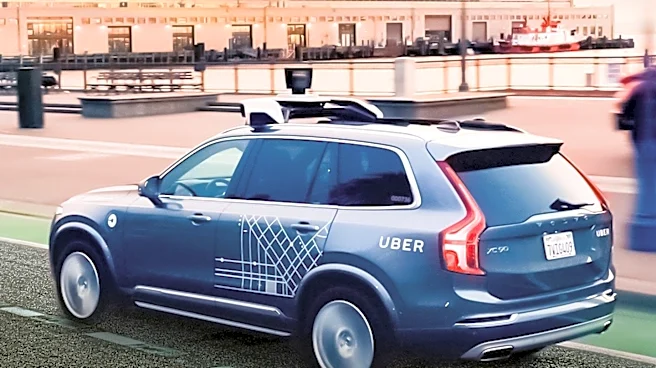
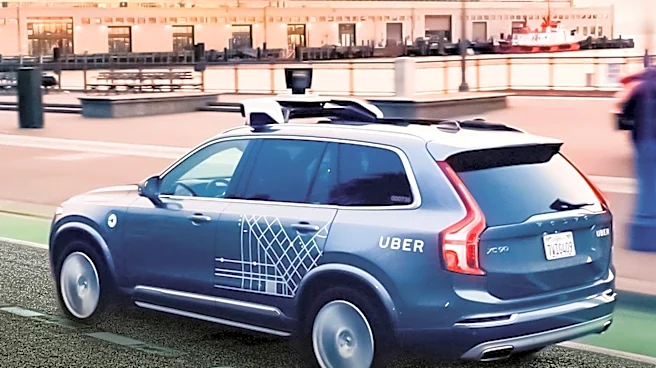
year-over-year increase. Revenues totaled $14.77 billion, slightly exceeding the Zacks Consensus Estimate of $14.74 billion and representing a 10% year-over-year increase. CEO Dara Khosrowshahi highlighted record platform engagement with 215 million monthly active consumers and gross bookings increasing 20% to $59.8 billion. The company is focusing on autonomous vehicle expansion, aiming for 700 fully driverless vehicles by the end of 2026 and over 2,000 by the end of 2027. Uber also noted strong growth in its Delivery segment, with gross bookings up 23% year-over-year on a constant-currency basis, driven by restaurant demand and expanding grocery and retail operations. International Mobility supply constraints and higher fuel costs were identified as near-term challenges.
Why It's Important?
Uber's Q3 2026 earnings report provides a crucial insight into the company's strategic direction and operational health amidst evolving market conditions. The miss on GAAP earnings, despite revenue growth, could impact investor confidence and stock performance, signaling potential profitability challenges. The aggressive expansion into autonomous vehicles signifies a long-term play to reduce operational costs and enhance efficiency, potentially disrupting the traditional ride-sharing model. Success in this area could give Uber a significant competitive advantage. Furthermore, the continued growth in the Delivery segment, particularly in grocery and retail, highlights Uber's diversification strategy beyond ride-sharing, positioning it as a broader logistics and delivery platform. Addressing international supply constraints and fuel costs will be critical for maintaining growth momentum in key global markets, directly affecting its market share and profitability.
What's Next?
Uber plans to accelerate its autonomous vehicle commercialization, with a target of expanding its fully driverless fleet significantly by the end of 2027. This expansion will likely involve further partnerships and a transition towards third-party financing to scale these operations. The company will continue to invest in driver acquisition, retention, and engagement to address Mobility supply constraints, particularly in international markets like Brazil and India. For the fourth quarter, Uber projects non-GAAP earnings between 95-99 cents per share and gross bookings between $63.25 billion and $65.25 billion, indicating continued growth expectations. Management will likely focus on balancing sustained platform growth with strategic investments in driver availability, Delivery engagement, and autonomous transportation, aiming for profitable expansion while navigating marketplace investments.
Beyond the Headlines
The strategic pivot towards autonomous vehicles by Uber carries significant long-term implications for the future of transportation and labor markets. A successful transition to driverless fleets could drastically alter the gig economy, potentially reducing the demand for human drivers and reshaping employment opportunities in the ride-sharing and delivery sectors. This shift could also raise ethical and regulatory questions regarding job displacement and the safety of autonomous systems. Furthermore, Uber's deepening presence in grocery and retail delivery positions it as a formidable competitor to traditional logistics companies and e-commerce giants, potentially leading to increased market consolidation and intensified competition in the last-mile delivery space. The company's ability to integrate these diverse services seamlessly will be key to its sustained growth and market dominance.