


What's Happening?
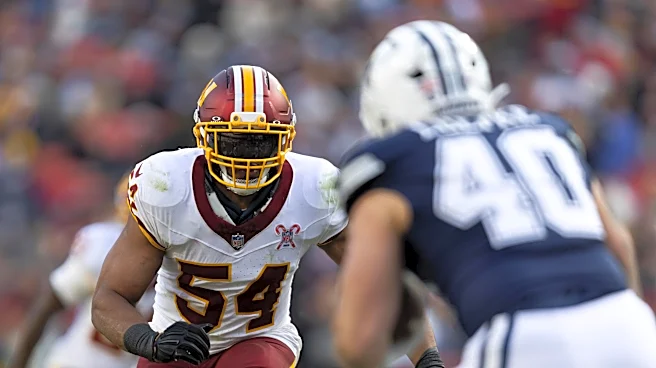
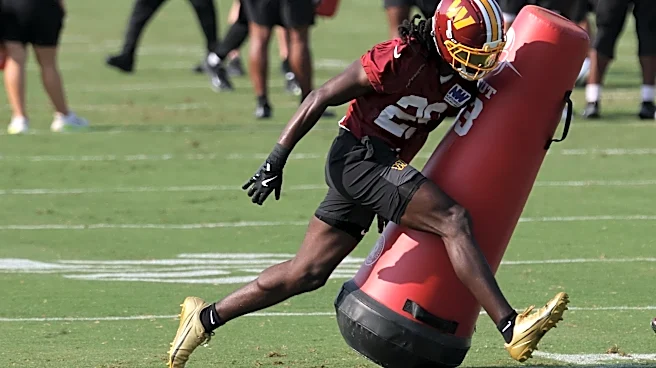
The Washington Commanders' online store has completely sold out of merchandise bearing the team's former name and logo. This development was initially reported by Eric Flack of WUSA, who noted the sale of such gear earlier in the week. While online stock
is depleted, items with the old branding are still available at the team's physical brick-and-mortar store. The Commanders have defended their decision to sell this merchandise by stating it honors franchise alumni and is necessary to maintain their trademark rights. This move has drawn criticism, particularly from the Association on American Indian Affairs, which promptly spoke out against what it perceives as a regression towards a name widely considered a slur. This marks the most overt embrace of the former name since it was officially dropped in 2020.
Why It's Important?
This situation highlights a complex interplay between team branding, historical identity, and public perception, particularly concerning sensitive cultural issues. The rapid sell-out of merchandise with the old name suggests a significant segment of the fanbase still identifies with or desires the previous branding, despite its controversial nature. For the Commanders, maintaining trademark rights is a legitimate business concern, but the decision to actively sell this merchandise risks alienating groups who found the original name offensive. The backlash from organizations like the Association on American Indian Affairs underscores the ongoing societal debate about cultural appropriation and the responsibility of major sports franchises in shaping public discourse. This event could influence how other sports teams approach rebranding efforts and manage their historical legacies, especially those with names or symbols that have faced similar scrutiny.
What's Next?
It remains to be seen whether the Washington Commanders will continue to push the boundaries regarding the re-normalization of the former name. The team's actions will likely be closely monitored by both its fanbase and advocacy groups. The continued availability of the merchandise in physical stores, coupled with the online sell-out, suggests a potential for further engagement with the controversial branding. Future decisions by the Commanders regarding their branding strategy, particularly concerning any further reintroduction or promotion of the old name, will likely face significant public and media scrutiny. The response from the Association on American Indian Affairs indicates that any such moves could reignite broader discussions about cultural sensitivity in sports.
Beyond the Headlines
The sale of the Commanders' old merchandise delves into deeper questions about nostalgia, identity, and the commercialization of controversial symbols. For many fans, the old name represents a long-standing tradition and personal connection to the team's history, separate from its problematic connotations. However, for others, particularly Indigenous communities, the name is inextricably linked to a history of disrespect and harm. The team's justification of maintaining trademark rights, while legally sound, also reveals the economic incentives at play in managing brand legacy. This incident could serve as a case study in the ongoing tension between preserving historical brand elements and evolving societal values, potentially influencing how other institutions navigate similar challenges in an increasingly conscious public sphere.