





What's Happening?
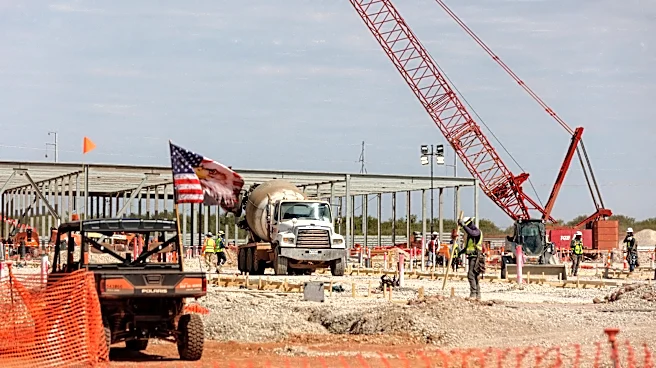
The rapid expansion of artificial intelligence (AI) data centers across the U.S. is creating a significant boom in blue-collar jobs, including welders, pipefitters, electricians, and HVAC technicians. Companies like Amazon and Meta are investing billions
in these projects, such as Meta's $27 billion Hyperion project in Louisiana and Amazon's $12 billion commitment, generating thousands of construction and operational roles. For instance, Meta's Hyperion data center in Richland Parish, Louisiana, is projected to support 7,500 jobs during peak construction and 1,000 operational jobs. This surge in demand is leading to strong pay, with apprentice technicians earning $40,000-$60,000 and experienced electricians potentially exceeding $100,000. However, this growth is met with increasing public opposition, with polls indicating that a majority of Americans oppose data centers in their local areas due to concerns about noise, water usage, and environmental impact. This backlash is prompting states like Texas and New York to implement moratoriums and stricter regulations on new data center developments.
Why It's Important?
This phenomenon highlights a critical tension between economic development driven by AI infrastructure and local community concerns. The creation of well-paying blue-collar jobs in regions often overlooked by the tech industry offers significant economic benefits, including increased wages and local spending. Cushman & Wakefield research suggests that every 100 megawatts of new data center development can create nearly 1,300 local jobs and generate substantial annual wages and gross output. This provides opportunities for individuals without four-year degrees, fostering a 'blue-collar resurgence.' However, the growing public and political resistance, fueled by environmental and quality-of-life issues, threatens to slow down or halt future data center projects. This could impact the long-term job growth in these trades and potentially shift data center development to areas with fewer regulatory hurdles and lower costs, affecting regional economic disparities.
What's Next?
The immediate future will likely see a continuation of the current data center construction pipeline, as existing projects with permits are largely unaffected by recent moratoriums. However, the increasing public sentiment against new developments and the implementation of stricter regulations in states like Texas and New York suggest a more challenging environment for future projects. Regulators will be tasked with developing new standards concerning energy, water, air, noise, and community impacts. This could lead to higher operational costs for data center companies and a more selective process for site approvals. The industry may need to address community concerns more proactively, potentially through better environmental practices or more transparent communication about local benefits. The long-term demand for blue-collar trades in this sector will depend on the balance between the ongoing need for AI infrastructure and the political and social will to accommodate it.
Beyond the Headlines
The blue-collar boom in AI data center construction challenges the common narrative that AI primarily displaces jobs. Instead, it reveals how AI's physical infrastructure demands create new, specialized roles that cannot be offshored or automated. This shift underscores the importance of vocational training and trade schools in preparing the workforce for the evolving demands of the digital economy. The backlash from communities also brings to light the often-unseen environmental footprint of digital technologies, particularly the significant energy and water consumption of data centers. This raises ethical questions about the sustainability of rapid AI expansion and the responsibility of tech giants to mitigate their environmental impact and engage more effectively with local communities. The debate also highlights the need for more accurate and transparent economic impact studies, as some critics argue that developers often overpromise job creation and secure excessive tax breaks, leading to community disillusionment.