



What's Happening?
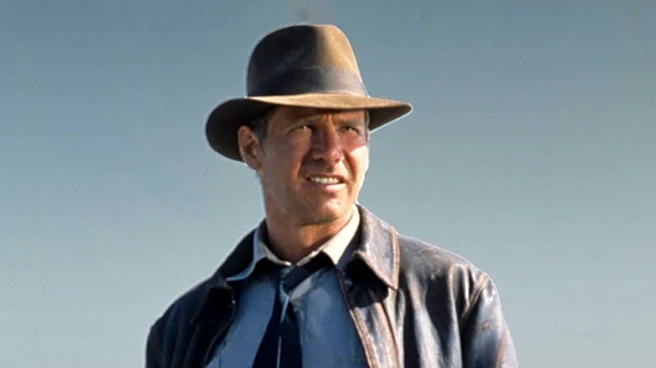
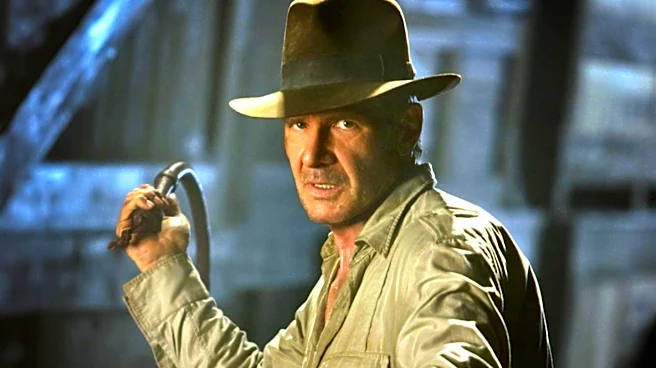
A long-standing fan theory, recently highlighted by self-professed movie detective Ivan Mars on TikTok, posits that the entire 'Indiana Jones' film series is a dream experienced by Han Solo (Harrison Ford) while he was frozen in carbonite. This period
of unconsciousness occurred between the events of 'Star Wars: Episode V — The Empire Strikes Back' and 'Star Wars: Episode VI — Return of the Jedi.' The theory gains traction from numerous crossover references, or Easter eggs, found in both franchises. For instance, 'Indiana Jones and the Raiders of the Lost Ark' features C-3PO and R2-D2 carved into hieroglyphs and a plane with the call sign OB-CPO, referencing Obi-Wan Kenobi and C-3PO. 'Indiana Jones and the Temple of Doom' includes a club named 'Club Obi-Wan,' and 'Indiana Jones and the Last Crusade' shows barrels stenciled with 'Carboneto.' Conversely, 'Star Wars' projects also contain 'Indiana Jones' Easter eggs, such as the fertility idol from 'Raiders of the Lost Ark' appearing in 'Solo: A Star Wars Story' and Indiana's whip and Sankara stones in 'Andor.'
Why It's Important?
This theory is important as it highlights the deep interconnectedness and shared creative DNA between two of the most iconic film franchises in cinematic history, both significantly shaped by George Lucas. It underscores how filmmakers often weave subtle (and sometimes not-so-subtle) references into their works, creating a rich tapestry for dedicated fans to discover and interpret. The longevity and popularity of such theories demonstrate the enduring cultural impact of these films and the active role audiences play in engaging with and expanding their narratives. It also showcases the unique position of Harrison Ford, who has portrayed two of the most beloved and recognizable characters in film, leading to playful speculation about their potential shared universe. The theory, while not officially confirmed, enriches the fan experience by adding another layer of depth and discussion to these cinematic universes, fostering a sense of community among enthusiasts who enjoy dissecting and theorizing about their favorite stories.
What's Next?
While there is no official confirmation expected from Lucasfilm or the filmmakers regarding this fan theory, discussions and analyses of these Easter eggs are likely to continue among fans. The ongoing release of new content within both the 'Star Wars' and 'Indiana Jones' universes may introduce further references, either intentionally or coincidentally, that could fuel or refute the theory. Content creators, film critics, and fan communities will likely continue to explore and debate the implications of these crossovers, potentially uncovering new connections or interpretations. The theory serves as a testament to the creative legacy of George Lucas and the lasting appeal of Harrison Ford's characters, ensuring that these cinematic worlds remain subjects of fascination and discussion for years to come. Future projects might subtly acknowledge these fan theories, even if not directly confirming them, as a nod to their dedicated audience.
Beyond the Headlines
The 'Han Solo's dream' theory delves into the fascinating realm of meta-narratives and intertextuality in popular culture. It highlights how audiences actively participate in constructing meaning beyond the explicit narrative presented on screen. The shared characteristics between Han Solo and Indiana Jones—both being sarcastic, resourceful, and a bit 'scruffy-looking'—lend a psychological depth to the theory, suggesting a subconscious connection between the characters that transcends their distinct fictional universes. This phenomenon reflects a broader trend in modern storytelling where franchises are increasingly interconnected, and creators often embed references that reward attentive viewers. It also touches upon the concept of authorial intent versus audience interpretation, where the meaning of a work can evolve and expand through collective fan engagement, creating a richer and more dynamic cultural artifact. The theory, regardless of its factual basis, enriches the cultural dialogue surrounding these beloved films.