








What's Happening?
U.S. Customs and Border Protection (CBP) has introduced several new regulations and initiatives. The Commercial Customs Operations Advisory Committee (COAC) recommended that CBP establish a central webpage for guidance and a feedback mechanism for the
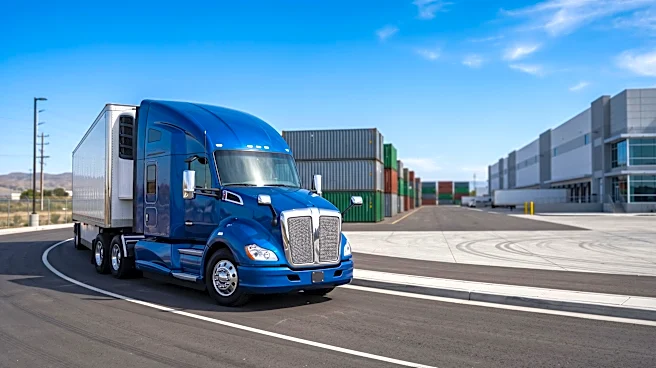
trade community. CBP also issued an alert to CTPAT partners, emphasizing that Importers of Record (IORs) and licensed customs brokers must ensure the accuracy and completeness of information submitted on CBP Form 5106, the Importer Identity Form, as mandated by Executive Order 14411. Starting September 30, 2026, organization broker license applications will be automated and submitted through the eCBP portal. Additionally, CBP announced a two-year electronic export manifest (EEM) pilot program for truck shipments leaving the U.S., set to begin on October 23. The agency also provided guidance on technical corrections for certain Section 301 product exclusions.
Why It's Important?
These changes significantly impact U.S. importers, customs brokers, and logistics providers. The emphasis on accurate IOR data and the automation of broker licensing aim to enhance compliance and streamline processes, but they also place a greater burden on businesses to maintain meticulous records and adapt to new digital systems. The EEM pilot program could revolutionize export procedures for truck shipments, potentially reducing paperwork and accelerating border crossings, which would benefit cross-border trade efficiency. However, it also requires investment in new technologies and training for compliance. The Section 301 guidance offers clarity for businesses navigating complex tariff landscapes. Overall, these measures reflect CBP's ongoing efforts to modernize customs operations, improve data integrity, and strengthen enforcement, which will necessitate proactive adjustments from all stakeholders in the import and export ecosystem.
What's Next?
Importers and customs brokers must immediately review their internal processes to ensure compliance with the updated requirements for CBP Form 5106 and prepare for the automated broker licensing system. Companies involved in truck exports should monitor the EEM pilot program closely and consider participating or preparing for its eventual broader implementation. The COAC's recommendations suggest a potential for improved communication and resource availability from CBP, which stakeholders should leverage. Businesses should also stay informed about any further guidance on Section 301 exclusions. The overarching trend indicates a continued push towards digitalization and stricter enforcement in U.S. customs, requiring ongoing adaptation and investment in compliance infrastructure from the trade community.
Beyond the Headlines
These regulatory updates signify a broader shift towards a more data-driven and technologically advanced approach to border management in the U.S. The focus on data accuracy and digital submissions aims to enhance national security, combat illicit trade, and improve the efficiency of legitimate commerce. The EEM pilot, in particular, could serve as a model for future digital initiatives across various modes of transport, potentially setting new standards for global trade facilitation. However, these changes also highlight the increasing complexity of international trade compliance, demanding specialized expertise and robust internal controls from businesses. The long-term implications include a more secure and efficient, but also more demanding, environment for U.S. importers and exporters.