







What's Happening?
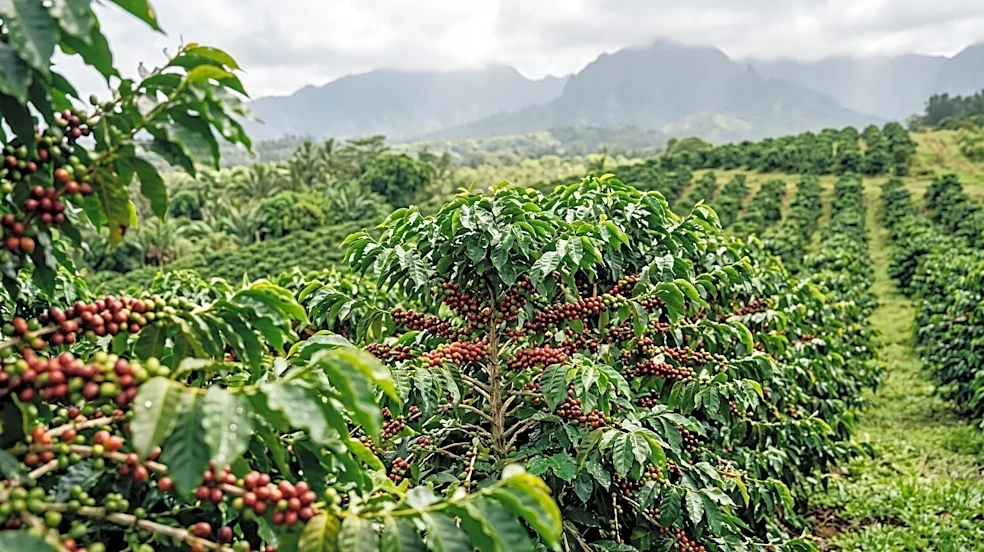
Dole Food Co. has announced its decision to discontinue coffee farming operations on Oahu, Hawaii, leading to the layoff of nine employees on November 30. This move is part of an ongoing effort to sell the 154-acre Waialua Estate farm. The company's general
manager for Hawaii, Dan Nellis, stated that Dole will now concentrate on its core business of pineapple farming. This follows the sale of a nearby 151-acre cacao orchard in July. Dole had established coffee and cacao farms in 1996 as part of agricultural diversification after closing Waialua Sugar Co. The coffee orchard has been listed for sale for over a year, with approximately 167,000 trees occupying most of the 208 acres of farmland for sale. The company last harvested coffee during the most recent season, which runs from September to February, and had conducted a major pruning to boost future yields.
Why It's Important?
This decision by Dole Food Co. signifies a strategic shift in its agricultural focus in Hawaii, moving away from diversified crops like coffee and cacao to concentrate solely on pineapple. This could have implications for the local agricultural landscape, potentially reducing crop diversity and impacting the small-scale coffee industry on Oahu. The layoffs, though small in number, represent a direct economic impact on the affected employees and their families. Furthermore, Dole's long history in Hawaii, dating back to James Dole's establishment of Hawaiian Pineapple Co. in 1901, makes this a notable change in its operational footprint. The sale of agricultural land also reflects a broader trend of land divestment by Dole on Oahu, with thousands of acres sold to various entities over the past decade, influencing land use and development patterns across the island.
What's Next?
The immediate next step for Dole Food Co. is the cessation of coffee farming and the layoff of nine employees by November 30. The company will continue its efforts to sell the 154-acre Waialua Estate coffee farm, which has been on the market for over a year. Potential buyers could include other agricultural enterprises, developers, or conservation groups, which would determine the future use of the land. Dole will also proceed with its stated focus on pineapple farming on its remaining 2,700 acres above Oahu's North Shore. The state of Hawaii, which recently acquired the Wahiawa reservoir and dam from Dole, will continue its $65 million improvement work on the dam, ensuring water supply for Dole and other area farms, now as customers of the state's Agribusiness Development Corp.
Beyond the Headlines
The cessation of Dole's coffee operations on Oahu highlights the evolving challenges and strategic realignments within the U.S. agricultural sector, particularly in regions like Hawaii with unique land and water management issues. The company's decision to divest from diversified crops and focus on pineapple reflects a prioritization of core competencies and potentially higher-yield operations. This move also underscores the broader trend of large agricultural corporations re-evaluating their land holdings and operational models in response to market demands, environmental regulations, and economic pressures. The transfer of the Wahiawa reservoir and dam to the state, a condition to avoid meeting new dam safety standards, illustrates the complex interplay between corporate interests, public infrastructure, and regulatory compliance, with long-term implications for water resources and agricultural sustainability in the region.