




What's Happening?
The U.S. Environmental Protection Agency (EPA) has issued a final rule that narrows the air toxics compliance requirements for process wastewater at new major-source polyvinyl chloride (PVC) and copolymer production facilities. This November 9, 2026,
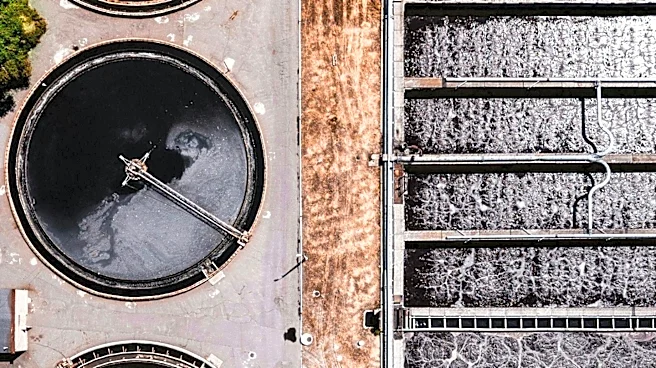
rule eliminates a separate limit for total non-vinyl chloride organic hazardous air pollutants (HAP) and its associated testing, monitoring, recordkeeping, and reporting obligations for qualifying new major sources. Instead, the EPA will rely on the existing, more stringent vinyl chloride limit as a surrogate for controlling other organic HAP in process wastewater. This targeted relief does not apply to existing major sources or area sources, which must continue to meet their current requirements. The EPA's rationale is based on the effectiveness of steam stripping, a control technology for vinyl chloride and other organic HAP in PVC process wastewater, concluding that compliance with the vinyl chloride standard adequately ensures control of other HAP.
Why It's Important?
This regulatory change is significant for the U.S. chemical manufacturing industry, particularly for companies planning new PVC production facilities or undergoing qualifying reconstructions. While the EPA estimates modest direct savings of approximately $2,900 in initial capital and $30,000 annually for a future new source, the more substantial benefit may be operational simplicity. By removing a separate numerical standard, project teams can streamline testing plans, laboratory scopes, commissioning procedures, and ongoing reporting. This could lead to more efficient compliance processes and potentially faster project development. However, the rule's limited scope means that existing facilities do not receive the same relief, creating a differentiated regulatory landscape within the PVC industry. Companies operating multiple PVC units will need to carefully assess the applicability of the rule to each individual source.
What's Next?
The final rule became effective on November 9, 2026. Parties seeking judicial review have until January 8, 2027, to petition the U.S. Court of Appeals for the D.C. Circuit. For PVC manufacturers and project developers, the immediate next step is to determine eligibility at the unit level, including reconstructed units, and streamline compliance programs only where the rule allows. It is crucial for companies to avoid automatically changing existing-source or area-source programs, as these remain subject to their original requirements. Additionally, companies should check existing permits and contracts before reducing testing, as federal regulatory amendments do not automatically rewrite facility-specific obligations. The EPA has also indicated that its broader reconsideration of the PVC National Emission Standards for Hazardous Air Pollutants (NESHAP) remains unfinished, suggesting potential future regulatory changes.
Beyond the Headlines
The EPA's decision to use vinyl chloride as a surrogate for other organic HAP in process wastewater for new facilities highlights a broader trend in environmental regulation towards risk-based and technology-driven compliance frameworks. This approach, while offering operational efficiencies, could face scrutiny regarding its technical basis, especially if challenged in court. The distinction between eliminating a federal compliance obligation and the continued need for monitoring wastewater constituents for other business, permit, or operational reasons is critical. This rule underscores the complex interplay between federal environmental regulations, industry practices, and the potential for legal challenges, particularly when regulatory judgments are based on surrogate measures rather than direct, separate limits for all pollutants. The ongoing nature of the PVC NESHAP reconsideration also points to the dynamic and evolving landscape of environmental policy for industrial sectors.