








What's Happening?
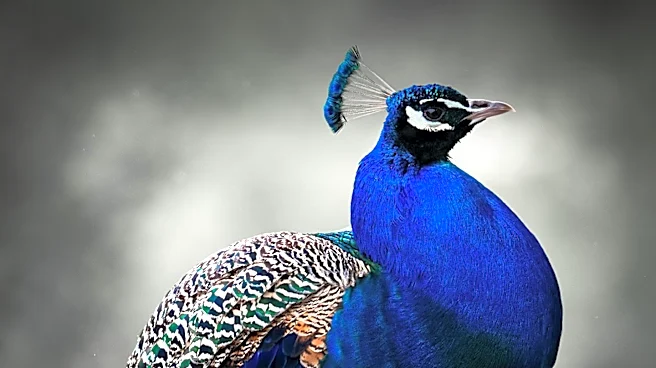
A recent analysis delves into the multifaceted symbolism of peacocks in art across various cultures and historical periods. The peacock, known for its vibrant plumage and dramatic display, has been utilized by artists to convey a range of meanings, including
beauty, pride, renewal, immortality, paradise, wealth, and social status. The interpretation of the peacock's symbolism is heavily dependent on the cultural context, historical era, and specific setting within an artwork. For instance, early Christian art often associated peacocks with paradise and immortality due to the belief that their feathers renewed themselves. In contrast, Mughal art in South Asia linked the bird with imperial splendor and luxury, famously exemplified by the Peacock Throne commissioned for Emperor Shah Jahan. The study emphasizes that the bird's visual characteristics, such as its eye-like patterns on feathers and its fan-like tail display, offer artists numerous possibilities for symbolic representation.
Why It's Important?
Understanding the diverse symbolism of the peacock in art is important for appreciating the depth and complexity of cultural expression throughout history. This analysis highlights how a single motif can carry vastly different meanings across various traditions, from spiritual concepts in Christian art to representations of power and wealth in South Asian courts. For contemporary American audiences, this insight encourages a more nuanced interpretation of art, moving beyond singular, fixed definitions. It underscores that modern interpretations often blend historical symbolism with personal expression, reflecting themes of individuality, confidence, and luxury. This broader understanding enriches cultural literacy and provides a framework for analyzing how visual elements contribute to narrative and meaning in artistic works, influencing how art is perceived and valued in society.
What's Next?
The ongoing exploration of art historical symbolism, such as that of the peacock, will likely continue to inform academic discourse and public appreciation of art. Future studies may delve deeper into specific regional variations or the evolution of these symbols in contemporary digital art and media. As global cultural exchange increases, there may be a growing interest in comparative analyses of how such symbols are reinterpreted and integrated into new artistic contexts. This continuous re-evaluation helps maintain the relevance of historical art forms and their underlying messages for new generations, potentially influencing art education, museum curation, and even commercial design that draws inspiration from historical motifs.
Beyond the Headlines
The study of peacock symbolism extends beyond mere art history, touching upon broader ethical and cultural dimensions. It reveals how human societies imbue natural elements with profound meaning, reflecting their values, beliefs, and social structures. The tension between positive interpretations (beauty, renewal) and negative ones (vanity, excessive pride) embedded in the peacock's symbolism offers a lens through which to examine societal attitudes towards self-display and confidence. This duality encourages critical thinking about how visual cues shape perceptions and moral judgments. Furthermore, the adaptability of the peacock as a symbol across diverse cultures and eras highlights the universal human tendency to seek and create meaning, demonstrating the enduring power of visual language to communicate complex ideas and emotions.