





What's Happening?
A GIA Graduate Gemologist has released a forecast for engagement ring trends in 2027, predicting significant shifts in consumer preferences and market dynamics. According to the forecast, engagement ring settings are expected to become lower and more
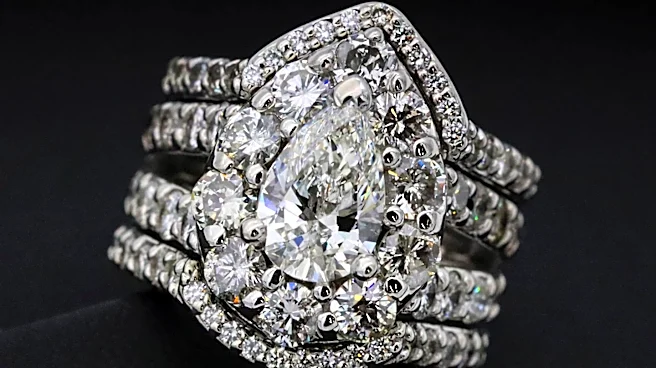
durable, with bezels, low four-prong designs, and integrated bands gaining popularity. This change is driven by consumers' desire for rings that can withstand constant daily wear, including during activities like gym workouts or manual labor. Another key prediction is the accelerated growth of resetting heirloom stones over purchasing new rings. More clients are reportedly arriving with family stones, seeking modern designs, influenced by the stone already being paid for, sustainability concerns, and the inherent sentimental value. The forecast also anticipates a complete separation of lab-grown diamonds into their own category, primarily for fashion jewelry like tennis bracelets and studs, while natural diamonds reassert their dominance in the engagement ring market. Additionally, certification scrutiny is expected to go mainstream, with buyers becoming more discerning about grading reports and prioritizing independent certifications like GIA.
Why It's Important?
These forecasted trends signal a notable evolution in the U.S. jewelry industry, impacting manufacturers, retailers, and consumers. The shift towards more durable settings suggests a demand for practical, long-lasting designs, potentially influencing product development and marketing strategies for jewelers. The increasing preference for resetting heirlooms highlights a growing consumer interest in sustainability and personalized, sentimental value, which could lead to a rise in custom design services and a potential decrease in demand for newly mined or lab-grown stones for engagement purposes. The predicted divergence of lab-grown diamonds into the fashion jewelry sector could redefine their market position, potentially stabilizing or increasing the perceived value of natural diamonds for engagement rings. Furthermore, heightened scrutiny over diamond certifications will empower consumers with more knowledge, pushing for greater transparency and accountability within the industry and potentially disadvantaging jewelers who do not provide independent grading reports.
What's Next?
In the coming years leading up to 2027, the jewelry industry will likely adapt to these emerging consumer preferences. Manufacturers may invest more in designing and producing robust, low-profile settings. Retailers might expand their services to include more custom design options for heirloom resetting and emphasize the provenance and certification of natural diamonds. The market for lab-grown diamonds is expected to continue its growth in the fashion jewelry segment, potentially leading to more innovative designs and lower price points in that category. Consumers are likely to become more educated and demanding, seeking out jewelers who offer transparent certification and expert gemological advice. This could also lead to increased competition among jewelers to demonstrate their expertise and ethical sourcing practices. Industry bodies may also continue to tighten language around synthetic and lab-grown terminology, further enhancing disclosure standards.
Beyond the Headlines
Beyond the immediate market shifts, these trends reflect broader societal values influencing consumer behavior. The emphasis on durability and practicality in engagement rings aligns with a more active and less formal lifestyle, where jewelry is expected to integrate seamlessly into daily life rather than being reserved for special occasions. The surge in heirloom resetting underscores a growing appreciation for heritage, sustainability, and conscious consumption, moving away from purely transactional purchases towards items with deeper personal and environmental significance. The increasing demand for transparency in diamond certification reflects a general societal trend towards greater accountability and informed decision-making across various consumer goods. This evolution suggests a more discerning and value-driven consumer base that prioritizes authenticity, longevity, and ethical considerations in their significant purchases, potentially influencing other luxury markets as well.