






What's Happening?
Edge Autonomy Limited has launched and partnered with Tectrax Limited, both Auckland-based technology companies, to develop and manufacture launch and recovery systems for uncrewed surface vessels (USVs). This collaboration aims to address the logistical
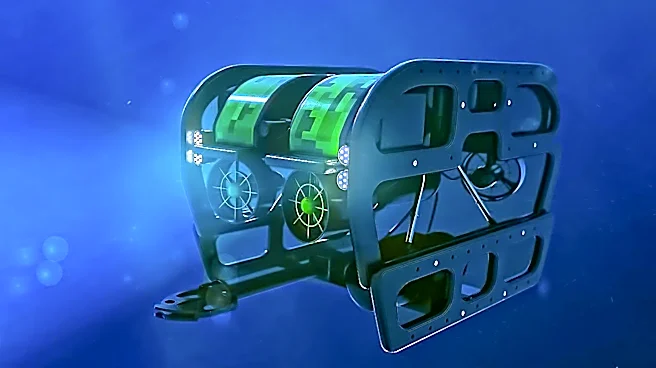
challenges of deploying and recovering USVs, particularly in littoral environments, by enabling vessels to be launched and recovered directly from beaches without personnel entering the water. Edge Autonomy will focus on systems integration, autonomy expertise, and certification pathways, while Tectrax will contribute its established electric drive and control technology and manufacturing capabilities. Their portfolio includes the Whai USV and the Pāpaka uncrewed vessel launcher, with the latter being the first product from this partnership. The first integrated launcher is currently under construction, with vessel trials planned for early 2027.
Why It's Important?
This partnership is significant for the uncrewed maritime systems sector, as it aims to transition from individual prototypes to affordable, operationally deployable systems manufactured at scale. According to Edge Autonomy Director John Gell, the current limitations in USV deployment are due to cost and logistics, not autonomy. By combining manufacturing capability with in-house systems integration, the companies intend to reduce production costs and enable wider adoption of USVs for defense, government, and scientific operations. This development could enhance maritime surveillance, security, and research capabilities across the Indo-Pacific region, offering a safer and more efficient alternative to traditional crewed operations, especially in hazardous or remote areas.
What's Next?
The companies plan to market their combined system, including the Whai USV and the Pāpaka launcher, to defense and government customers in New Zealand, Australia, the Pacific, and the wider Indo-Pacific. The modular manufacturing model, which involves producing common drive, power, control, and autonomy modules in New Zealand and allowing platform-specific components to be fabricated in customer countries, is designed to reduce freight costs, delivery lead times, and facilitate local industrial participation. Vessel trials for the first integrated launcher are scheduled for early 2027, which will be a critical step in validating the system's operational capabilities and preparing for commercial deployment.
Beyond the Headlines
This initiative highlights a broader trend towards automation and uncrewed systems in maritime operations, driven by the need for increased efficiency, reduced human risk, and cost-effectiveness. The focus on launch and recovery systems addresses a critical bottleneck in USV deployment, making these technologies more practical for real-world applications. The modular manufacturing approach also reflects a strategic move to foster international collaboration and local industrial involvement, which can be crucial for securing defense contracts and promoting technological transfer. This development could set a precedent for how advanced maritime technologies are developed, manufactured, and deployed globally, influencing future defense and commercial strategies.