




What's Happening?
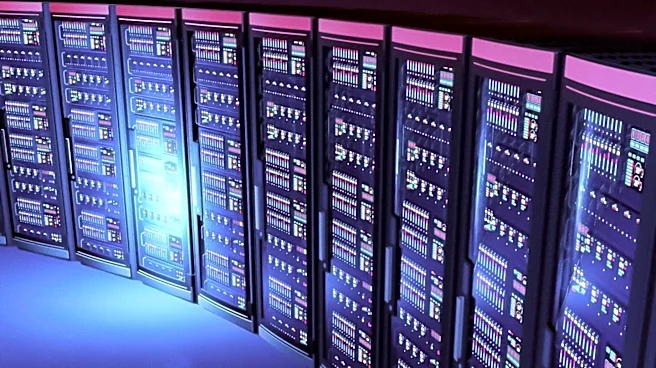
Modern data centers, particularly those equipped with advanced Nvidia graphics processing units (GPUs) for AI, are experiencing a significant surge in power consumption. These high-density AI clusters can demand 100 to over 300 kilowatts per rack, which
is up to 20 times the electricity required by traditional server racks. This escalating demand for power has created a bottleneck in the expansion of AI data centers, leading to substantial capital investment in companies that can reliably supply electricity or manufacture power generation equipment. Technology companies are increasingly entering into long-term power purchase agreements with independent power producers and exploring behind-the-meter, off-grid solutions like gas turbines and fuel cells to meet their energy needs. This shift is transforming the energy sector, making power generation and infrastructure critical components of the AI boom.
Why It's Important?
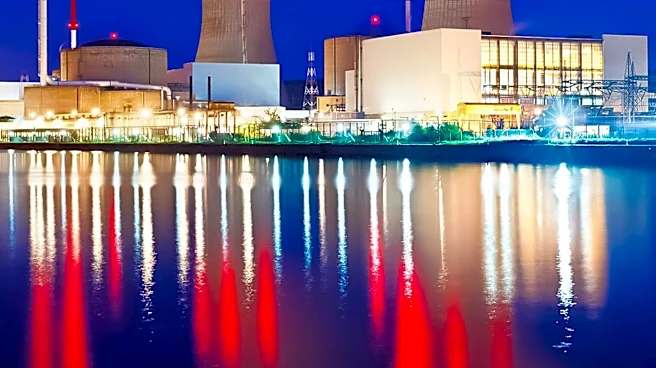
The immense power requirements of Nvidia chip-filled data centers are reshaping the U.S. energy landscape and creating new investment opportunities. Utility operators, especially regulated ones like NextEra Energy, are benefiting from predictable income and reliable dividends due to increased demand. Independent power producers (IPPs) such as Constellation Energy and Vistra are also seeing significant gains as they secure long-term agreements with major tech companies like Microsoft and Meta Platforms. Constellation Energy, with its large nuclear capacity, is particularly attractive for providing carbon-free, baseload energy. The delays in connecting to the public utility grid, which can span three to seven years, are driving hyperscalers towards off-grid solutions. This trend benefits manufacturers of gas turbines and fuel cells, including GE Vernova and Bloom Energy, who are experiencing unprecedented demand for their on-site power generation technologies. The need for reliable and scalable power is now a critical factor in the growth of the AI industry, impacting infrastructure development and energy policy.
What's Next?
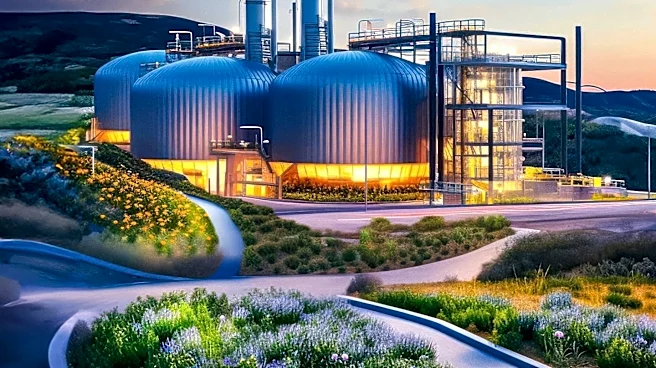
The trend of increasing power demand from AI data centers is expected to continue, driving further investment in diverse energy solutions. Companies like GE Vernova, with its substantial backlog in heavy-duty gas turbines, and Bloom Energy, with its fuel cell systems, are poised for sustained growth as hyperscalers seek immediate and reliable power sources. The development of small modular nuclear reactors (SMRs) by companies like Oklo and NuScale Power, though still in early stages, represents a potential long-term solution for off-grid, safe nuclear energy for data centers, with commercial availability anticipated in the 2030s. Additionally, battery storage systems from providers like Fluence Energy, which recently partnered with Nvidia and Siemens, will play a crucial role in stabilizing electrical loads and integrating with AI data center blueprints. The ongoing build-out of data centers will continue to transform energy and industrial sectors, making power generation a key determinant of technological advancement.
Beyond the Headlines
The escalating power demands of AI data centers highlight a deeper challenge: the sustainability and reliability of energy infrastructure in an era of rapid technological advancement. The shift towards off-grid and independent power solutions underscores the limitations of existing utility grids and the urgent need for innovation in energy delivery. This development could accelerate the adoption of advanced energy technologies, including nuclear and renewable sources, as companies prioritize energy independence and carbon-free operations. The ethical implications of massive energy consumption for AI, particularly concerning environmental impact and resource allocation, will likely become more prominent. Furthermore, the strategic importance of energy supply for technological leadership could lead to new geopolitical considerations and increased competition for energy resources, potentially influencing national security and economic policies. The integration of energy and technology sectors is becoming increasingly intertwined, creating a complex web of dependencies and opportunities.