






What's Happening?
The cycling community is demanding improved safety protocols after the tragic death of 19-year-old British rider Finlay Tarling, who was struck by a non-race vehicle during stage eight of the Volta a Portugal. This incident has reignited concerns about
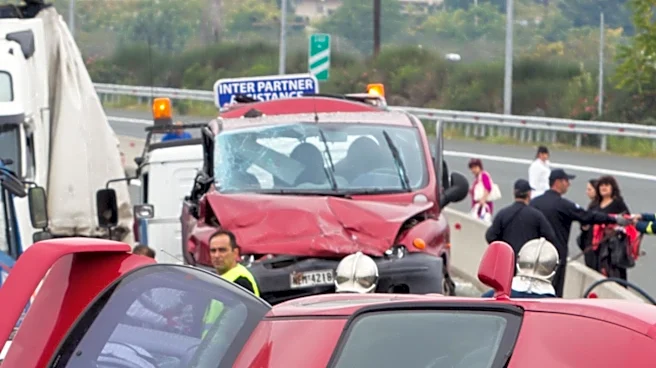
rider safety, particularly the presence of unauthorized vehicles on race courses. Despite the UCI's SafeR initiative, established after Gino Mäder's death in 2023, serious accidents and fatalities continue to occur. The initiative has primarily focused on minor adjustments like handlebar width and GPS head unit screen size, and has even allocated funds for legal battles rather than directly addressing critical safety gaps. Tarling's death marks one of eight rider fatalities in elite or development races since 2023, a number exceeding the total for the preceding 13 years. The incident involved a driver traveling against the race route, highlighting a critical failure in road closure procedures, as the roads were under a rolling closure rather than being fully secured. A police investigation is currently underway to determine the exact circumstances.
Why It's Important?
The recurring tragedies in professional cycling, exemplified by Finlay Tarling's death, underscore a systemic failure in ensuring rider safety, which has significant implications for the sport's future and its participants. The reliance on public roads for races, often with insufficient or poorly enforced road closures, exposes cyclists to preventable dangers. This situation not only endangers the lives of athletes but also erodes public trust and confidence in the sport's governing bodies, such as the UCI. The continued occurrence of fatalities despite initiatives like SafeR suggests that current measures are inadequate and misdirected, focusing on peripheral issues rather than fundamental safety concerns like vehicle access to race routes. This could lead to a decline in participation, particularly among young, promising talents, and may deter sponsors and fans if the perception of cycling as an inherently unsafe sport persists. The emotional toll on the cycling community, including riders, teams, and families, is immense, creating an environment of fear and uncertainty that can impact performance and mental well-being.
What's Next?
The cycling community, including the riders' union CPA, is calling for immediate and concrete action to prevent future tragedies. A police investigation into Finlay Tarling's death is ongoing, which may shed further light on the specific failures that led to the incident. It is anticipated that there will be increased pressure on the UCI and race organizers to implement stricter road closure protocols, potentially moving towards full road closures for all professional races. This could involve re-evaluating the feasibility and cost implications of such measures, as well as engaging with local authorities to ensure compliance. The effectiveness of the SafeR initiative will likely come under renewed scrutiny, with demands for its focus to shift towards more impactful safety interventions. Stakeholders may also push for greater transparency and accountability from governing bodies regarding safety incident investigations and the implementation of corrective actions. The ongoing Tour of Britain Women, which will pay tribute to Tarling, serves as a poignant reminder of the urgent need for change, and its execution will be closely watched for any immediate improvements in safety management.
Beyond the Headlines
The tragic death of Finlay Tarling extends beyond immediate safety concerns, touching upon the ethical responsibilities of sports organizations and the cultural perception of risk in professional cycling. The repeated fatalities raise questions about whether the pursuit of competitive spectacle is overshadowing the fundamental duty of care owed to athletes. This incident could catalyze a broader re-evaluation of the sport's structure, particularly how smaller races are managed and funded, as they often operate with less stringent safety measures due to budgetary constraints. There's a deeper implication for the mental health and well-being of cyclists, who are constantly exposed to inherent risks compounded by organizational shortcomings. The outpouring of grief and the rapid fundraising for a project supporting young Welsh riders highlight the strong community bonds within cycling, but also underscore a collective frustration with the perceived inaction of authorities. This event may force a cultural shift, demanding that safety be prioritized above all else, potentially leading to significant changes in race planning, infrastructure, and the allocation of resources within the sport globally.