





What's Happening?
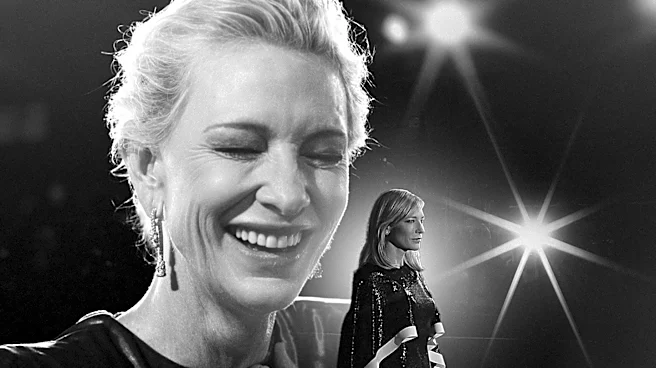
During a curtain call for her performance in 'Electra/Persona' at London's National Theatre, acclaimed actress Cate Blanchett politely requested that audience members refrain from filming the show. She acknowledged that while filming the curtain call might
be a source of pride, recording the actual performance detracts from the experience for subsequent audiences. Blanchett emphasized the rarity of shared, in-the-moment experiences in today's world and expressed concern that recording diminishes this for others. Her appeal was met with applause and cheers from the audience and has since gained significant traction on social media. This incident highlights a growing sentiment among performers regarding the pervasive use of mobile phones during live theatrical events, with other notable actors like Rosamund Pike, Daniel Craig, Hugh Jackman, and Patti LuPone having voiced similar frustrations in the past.
Why It's Important?
This event underscores a significant and ongoing challenge within the live performance industry: the impact of audience members' mobile phone usage. For actors, the presence of glowing screens and the act of recording can disrupt their concentration and the immersive atmosphere they strive to create. For audiences, constant filming can detract from the collective experience, as individuals are often more focused on capturing content than on engaging with the live art form. The widespread sharing of Blanchett's comments on social media indicates a broader public discussion and potential shift in audience etiquette expectations. This issue affects not only the artistic integrity of performances but also the economic viability of theater, as unique, unrecorded experiences are a core value proposition. The industry grapples with balancing audience engagement with maintaining the sanctity of live art, potentially leading to stricter policies or innovative solutions to manage phone use.
What's Next?
The increasing vocalization from prominent actors like Cate Blanchett regarding audience filming may lead to further discussions and potential policy changes within theaters globally, including in the U.S. Theater venues might explore enhanced measures to enforce existing no-filming policies, such as more visible signage, pre-show announcements, or even the use of technology to block recording devices. There could also be a push for educational campaigns to inform audiences about the detrimental effects of filming on the live experience for both performers and fellow attendees. The ongoing social media discourse surrounding such incidents could also organically foster a greater sense of collective responsibility among theatergoers, potentially leading to a self-regulation of phone use during performances. The 'Electra/Persona' play, co-starring Nina Hoss, is scheduled to run until October 10th, and it remains to be seen if Blanchett's appeal will have a lasting impact on audience behavior during its remaining run.
Beyond the Headlines
The issue raised by Cate Blanchett extends beyond mere etiquette; it touches upon the evolving nature of shared public experiences in an increasingly digital world. The impulse to record and share moments immediately reflects a broader cultural shift where personal documentation often supersedes present-moment immersion. This trend poses a fundamental challenge to art forms like theater, which thrive on the ephemeral and unrepeatable nature of live interaction. Ethically, it raises questions about intellectual property and the unauthorized distribution of copyrighted performances. Culturally, it highlights a tension between individual desire for content creation and the collective right to an undisturbed artistic experience. The long-term implications could involve a redefinition of audience-performer contracts, potentially leading to innovative ways for theaters to offer sanctioned, high-quality digital content while preserving the integrity of the live show, or a more stringent enforcement of a 'digital detox' within performance spaces.